
Best Bathroom Fixtures for Modern Homes in 2026
Table of Contents
- What Defines the Best Bathroom Fixtures for Modern Homes
- Quick Comparison: Top Bathroom Fixtures at a Glance
- Modern Bathroom Faucet Trends: Styles and Finishes
- How to Choose Bathroom Fixtures for Your Space
- Durable Bathroom Hardware Finishes That Last
- Smart Tech and Lighting to Elevate Your Bathroom
- Which Modern Bathroom Fixtures Fit Your Renovation?
- Frequently Asked Questions
Last Updated: September 5, 2026
Choosing the best bathroom fixtures for modern homes in 2026 is less about chasing trends and more about balancing durable materials, water efficiency, and a finish that still looks right a decade from now. At Crestpoint Home, we’ve curated fixtures that solve these real-world problems, and this guide breaks down what actually separates a lasting investment from a costly mistake.
The modern bathroom has shifted from a purely utilitarian space to a daily sanctuary. Below, we’ll show you how to evaluate materials, finishes, and smart technology so your renovation feels current without dating itself by 2030.
What Defines the Best Bathroom Fixtures for Modern Homes
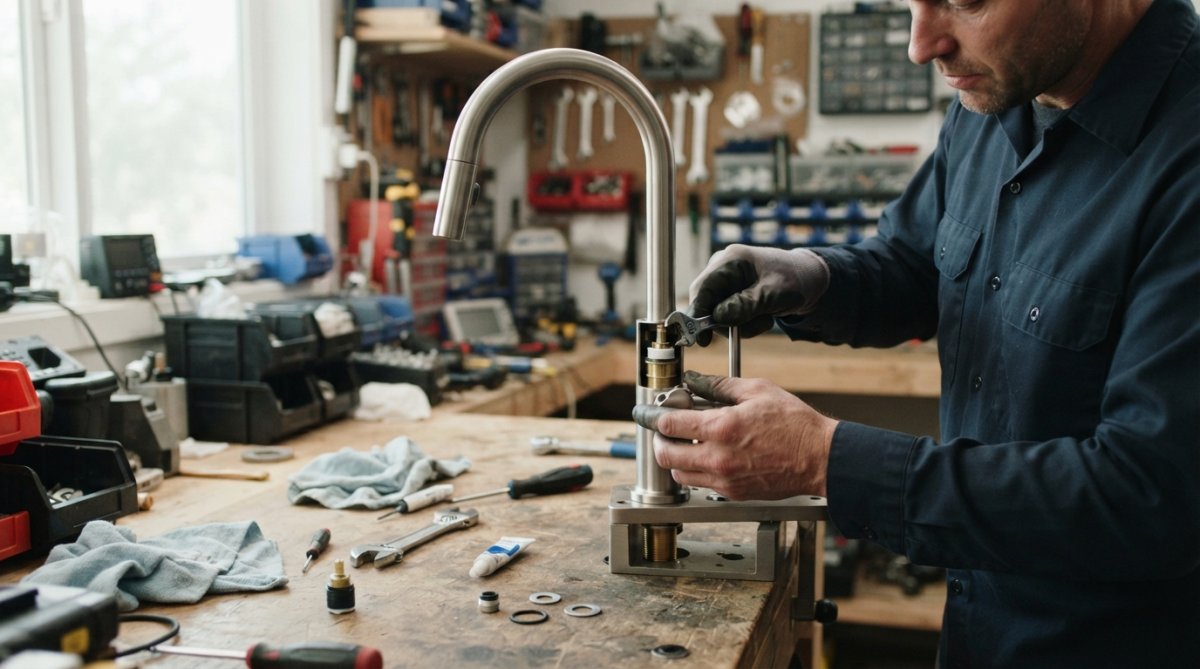
The best bathroom fixtures for modern homes share three non-negotiable traits: corrosion resistance, ceramic disc cartridges, and a design language that supports a minimalist aesthetic. If the cartridge fails, the most beautiful brushed nickel faucet in the world is just a leaky paperweight.
Water efficiency also defines a modern choice. Look for fixtures with a flow rate of 1.5 gallons per minute or less for faucets, which aligns with water conservation standards without sacrificing pressure (energy.gov).
Quick Comparison: Top Bathroom Fixtures at a Glance
A quick comparison table helps you match fixture types to your renovation priorities before we explore the details.
| Fixture Type | Best Finish | Key Feature | Ideal For |
|---|---|---|---|
| Single-Handle Faucet | Brushed Nickel | Ceramic disc cartridge | Everyday ease of use |
| Centerset Faucet | Chrome | Compact 4-inch setup | Small vanities |
| Widespread Faucet | Matte Black | Separate handles | Double vanities |
| Wall-Mounted Faucet | Polished Brass | Frees counter space | Minimalist look |
| Smart Toilet | Matte White | Touchless technology | Hygiene focus |
| LED Vanity Mirror | Silver/Black | Anti-fog, dimmable | Task lighting |
Your choice hinges on vanity size and plumbing configuration. A standard 3-hole sink makes a centerset the simplest swap, while a wall-mounted option requires considering pipe placement behind the wall.
Modern Bathroom Faucet Trends: Styles and Finishes
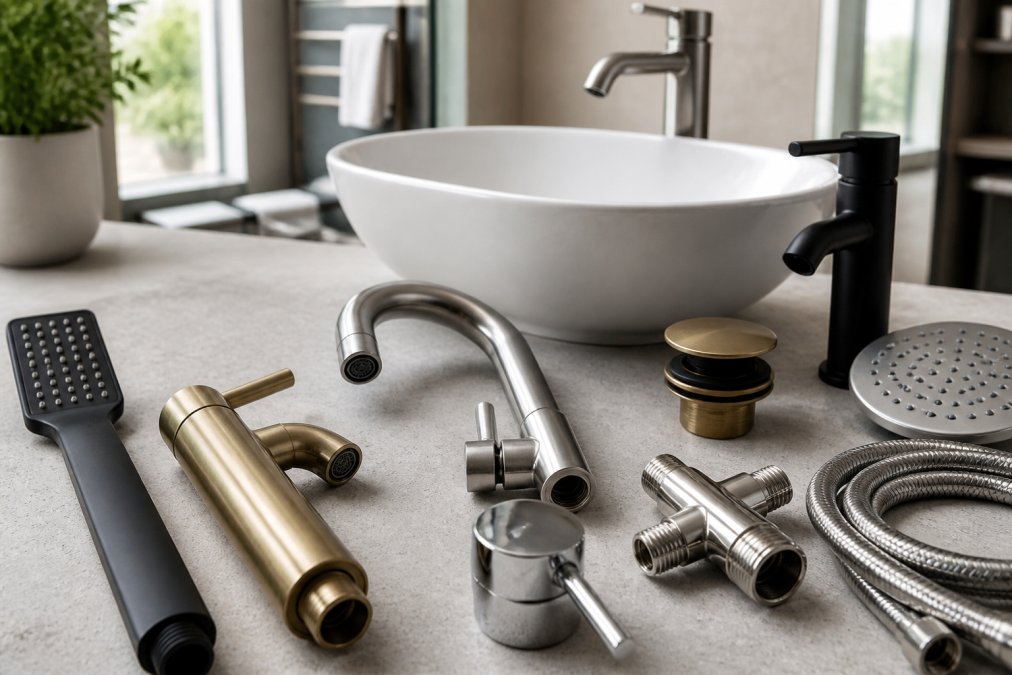
Modern bathroom faucet trends in 2026 favor a minimalist aesthetic with sculptural silhouettes. Single-handle faucets dominate because they offer temperature and flow control with one hand. The configuration you choose should match your sink drillings: centerset for 4-inch centers, widespread for 6-inch or wider spacing.
Matte black and brushed nickel lead, but the trend is shifting toward spot-resistant and tarnish-resistant technologies. Chrome remains a classic for its shine and durability, though it shows water spots more readily. Polished brass is returning for a luxury look but requires diligent maintenance to prevent tarnishing in humid environments.
How to Choose Bathroom Fixtures for Your Space
To choose bathroom fixtures effectively, you must first audit your water pressure and valve system. A rainfall showerhead looks luxurious but can feel weak if your home’s pressure sits below 40 psi. Similarly, a smart toilet with bidet features requires a consistent supply to operate its wash functions properly.
Start with a simple checklist to avoid costly returns:
- Measure the distance between your sink’s outer holes to determine if you need centerset or widespread faucets.
- Check your water pressure with a gauge attached to an outdoor spigot.
- Decide on a finish and stick to it across all hardware for a cohesive contemporary aesthetic.
- Verify the fixture’s flow rate complies with local water conservation codes.
If you are replacing fixtures during a bathroom renovation, consider the rough-in measurements for wall-mounted options early. Retrofitting a wall-mounted faucet after the tile is set is a significant plumbing project, so plan this before demolition begins.
The Plumbing Compatibility Angle: What Style Guides Skip
Most guides focus on aesthetics. What they rarely address, and what causes the most buyer remorse, is whether the fixture will actually work with your home’s existing plumbing. Run through these technical checks.
Water Pressure: The 40 PSI Threshold. Most residential plumbing operates between 40 and 80 psi. Below 40 psi, common in older homes with galvanized pipes or well systems, high-flow fixtures like rainfall showerheads will trickle (hud.gov). Above 80 psi, you risk premature wear on ceramic disc cartridges. A pressure-reducing valve at the main supply line solves the high-pressure problem for roughly $150 to $300.
Flow Rate and GPM: Matching Fixture to Supply. Modern faucets are regulated to 1.5 gallons per minute (GPM), and showerheads to 2.0 GPM (ecfr.gov). A 1/2-inch supply line handles one fixture at full flow; a 3/4-inch line handles two or three. If installing a smart toilet with an integrated bidet, verify it has a dedicated supply line, sharing with a sink faucet can cause a pressure drop that weakens the bidet.
Valve Compatibility: The Hidden Gotcha. If replacing only the shower trim (the visible handle and plate), you must match it to the existing valve brand and model. Delta, Moen, Kohler, and Grohe use proprietary valve systems, and trims are not interchangeable across brands. A mismatch means a full wall rework. Remove the handle and escutcheon plate and photograph the valve body, most manufacturers stamp the model number on it.
Thermostatic vs. Pressure-Balancing Valves. A pressure-balancing valve maintains temperature by reacting to water pressure changes, the standard for most homes. A thermostatic valve maintains precise temperature regardless of pressure fluctuations, making it superior for homes with multiple water-using appliances running simultaneously, but it costs roughly 50 to 100 percent more.
Rough-In Dimensions: Measure Twice, Buy Once. For widespread faucets, the center-to-center distance is typically 8 inches, but some models accommodate 6 to 16 inches. Centerset faucets are fixed at 4 inches. Measure the distance between the outer edges of the outermost holes, then subtract the diameter of one hole (typically 1.25 inches) to get the center-to-center distance. Getting this wrong is the most common reason for returns.
A Practical Pre-Purchase Checklist
Before you add anything to your cart, run this five-point verification:
- Measure your sink hole spacing, centerset (4-inch) or widespread (6-inch or wider).
- Test your water pressure with a $10 gauge from a home center. Ideal range: 40-80 psi.
- Identify your shower valve brand, photograph the valve body behind the trim.
- Check your supply line diameter, 1/2-inch or 3/4-inch copper or PEX.
- Confirm electrical availability near the toilet and vanity for smart fixtures and LED mirrors.
This checklist takes 20 minutes and prevents the most common installation failures.
Durable Bathroom Hardware Finishes That Last
Durable bathroom hardware finishes are determined by the application method, not just the color; look for physical vapor deposition or a high-quality powder coat. Brushed nickel is the most forgiving finish, hiding fingerprints and water spots while offering excellent corrosion resistance.
Matte black offers a bold aesthetic but can show hard water deposits more easily. Chrome is the most durable and easiest to clean, though it lacks the warmth of nickel. Polished brass adds vintage warmth but demands regular polishing; a tarnish-resistant clear coat helps but is not permanent.
The real difference between a $50 faucet and a $200 faucet is the internal cartridge. A ceramic disc cartridge resists wear from hard water far better than rubber washers, which degrade and cause drips.
Finish-Specific Maintenance: The Angle Most Guides Miss
Most style guides tell you which finish to buy, but almost none tell you how to keep it looking new past year one. Every popular finish has a specific failure mode, and knowing that before you buy is the difference between a fixture that looks dated in 2028 and one that still reads as intentional.
Brushed Nickel. Over time, alkaline cleaners and hard water can create a hazy film that dulls the texture. Clean with mild dish soap and water, then dry with a microfiber cloth. Avoid abrasive pads and acidic cleaners like vinegar, which can strip the protective lacquer layer.
Matte Black. This finish is a magnet for hard water spots, especially in homes with water above 7 grains per gallon of hardness. Wipe the fixture dry after every use and clean weekly with a pH-neutral cleaner. If spots form, a 50/50 white vinegar and water solution applied with a soft cloth for no more than 60 seconds breaks down mineral deposits. Rinse thoroughly and dry immediately.
Polished Brass. Uncoated brass will naturally oxidize and darken over time. To maintain the bright look, choose a fixture with a physical vapor deposition (PVD) coating, which resists oxidation for years, or commit to a monthly polishing routine with a non-abrasive brass polish. The PVD route is worth the premium.
Chrome. The most durable and easiest to clean, but it shows every water spot and fingerprint. Chrome resists corrosion and handles stronger cleaners. A daily wipe-down with a squeegee after showering keeps it spot-free, and a weekly clean with glass cleaner restores the shine.
The Coating Technology Behind the Finish
Understanding the application method helps you predict longevity. The two dominant processes are:
- Physical Vapor Deposition (PVD): A process where the finish is applied at a molecular level under vacuum and high heat, creating a bond that is nearly as hard as the metal itself. PVD finishes resist corrosion, scratching, and UV fading. This is the gold standard for matte black and brushed gold finishes.
- Electroplating: A more traditional process where a thin layer of metal is deposited onto the base material using an electric current. It is cheaper and perfectly adequate for chrome and nickel, but it is more susceptible to pitting and wear in high-humidity environments.
A quick test in the store: run your fingernail lightly across the surface. A PVD finish feels hard and smooth, while a cheaper electroplated finish may feel slightly softer. This tactile check takes five seconds and can save you from a finish that flakes within two years.
Warranty as a Maintenance Strategy
The warranty tells you how confident the manufacturer is in their coating. Look for a limited lifetime warranty that explicitly covers the finish against tarnishing, flaking, and peeling. Many budget fixtures only warrant the internal cartridge. If the warranty excludes "cosmetic finish defects" or limits coverage to five years, the manufacturer is telling you something about the expected lifespan of their coating.
Smart Tech and Lighting to Elevate Your Bathroom
Integrating smart technology and lighting transforms a functional bathroom into a daily retreat. A smart toilet with a heated seat, bidet, and auto-open lid adds convenience, but verify it supports your home’s electrical setup near the toilet. For most renovations, the highest-impact upgrade is the vanity mirror, which provides task lighting critical for grooming.
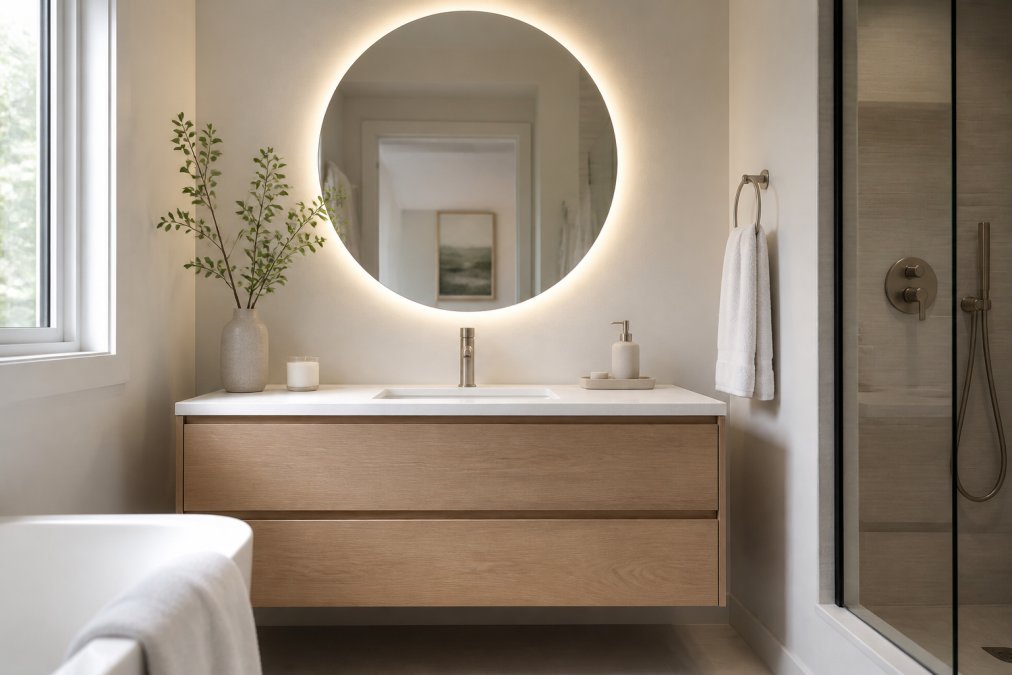
A backlit LED mirror with anti-fog and dimmable lights solves the two most common bathroom frustrations: shadows on your face and a fogged mirror after a hot shower. The Crestpoint Home round backlit LED vanity mirror offers three color temperatures, from warm 3000K to white 6000K, and remembers your last setting. At $149.88, it delivers the same functionality as models priced significantly higher, with an anti-corrosion and shatterproof design.
For a larger statement piece, the Hausvita Deluxe Edge Glow LED Bathroom Mirror at $429.88 provides a substantial viewing area with intelligent touch controls and a clear reflection that resists fog. These mirrors integrate seamlessly with a wall switch.
Which Modern Bathroom Fixtures Fit Your Renovation?
The modern bathroom fixtures that fit your renovation depend on your plumbing layout, your commitment to maintenance, and whether you prioritize accessibility or high-end luxury. For a primary bathroom, prioritize a single-handle faucet with a ceramic disc cartridge and a brushed nickel finish. If designing for aging in place, consider a touchless faucet and a comfort-height toilet.
Budget-conscious renovators should focus spending on the shower valve and toilet, where reliability matters most, and save on decorative elements like towel bars. A high-end luxury renovation might justify a wall-mounted faucet and a smart toilet, but only if you have verified your water pressure and electrical rough-ins.
Crestpoint Home supports your renovation with detailed product specifications and a support team available via phone, email, or live chat to answer installation questions. Our selection focuses on high-performance fixtures that bring modern performance and convenience into your home.

Selecting bathroom fixtures is a balance of aesthetics, engineering, and honest self-assessment about your home’s plumbing. Crestpoint Home simplifies this by offering a curated collection of mirrors and fixtures with clear specs, secure payment, and expert guidance. Explore the LED mirror collection to start your renovation with a centerpiece that blends function with timeless style.
Frequently Asked Questions
What is the current trend for bathroom fixtures?
Modern bathrooms lean toward minimalist designs with clean lines and spa-like tranquility. Matte black and brushed nickel finishes dominate, while smart technology like touchless faucets and LED mirrors with anti-fog features are becoming standard. Water-efficient models with aerators are also popular, combining eco-consciousness with performance. The focus is on fixtures that offer both a contemporary aesthetic and practical durability.
What are the best modern bathroom faucets?
The best modern faucets pair a single-handle design with a ceramic disc cartridge for reliable, drip-free operation. Look for finishes like brushed nickel or matte black that resist corrosion and show fewer fingerprints. Wall-mounted and widespread styles offer distinct looks, but ensure your sink drill pattern and water pressure are compatible before you buy. Prioritize models with a 1.5 GPM flow rate or less for water efficiency.
What finishes are best for modern bathroom hardware?
Brushed nickel remains a top choice for its corrosion resistance and ability to hide water spots. Matte black offers a bold, contemporary look but requires careful cleaning to avoid hard water buildup. Polished chrome is classic, durable, and budget-friendly, though it shows smudges easily. Consider your bathroom's traffic and maintenance habits; spot-resistant and tarnish-resistant coatings add longevity to any finish.
How do I choose bathroom fixtures that will not look dated?
Choose timeless shapes and neutral finishes over highly stylized, trend-driven designs. Brushed nickel, chrome, and matte black have proven staying power. Focus on quality construction, like solid brass bodies and ceramic disc valves, which ensure lasting performance. Integrated smart features, such as dimmable LED mirrors, add modern function without dictating a specific style, helping your bathroom age gracefully.
Are smart bathroom fixtures worth the investment?
Smart fixtures add convenience and daily comfort. An LED mirror with anti-fog and adjustable color temperature improves grooming accuracy and eliminates post-shower fog. Touchless faucets reduce germ spread and help with water conservation. While the upfront cost is higher than standard fixtures, the enhanced experience and energy-efficient LED lighting often justify the investment for homeowners planning a long-term renovation.
This article was written using GrandRanker