

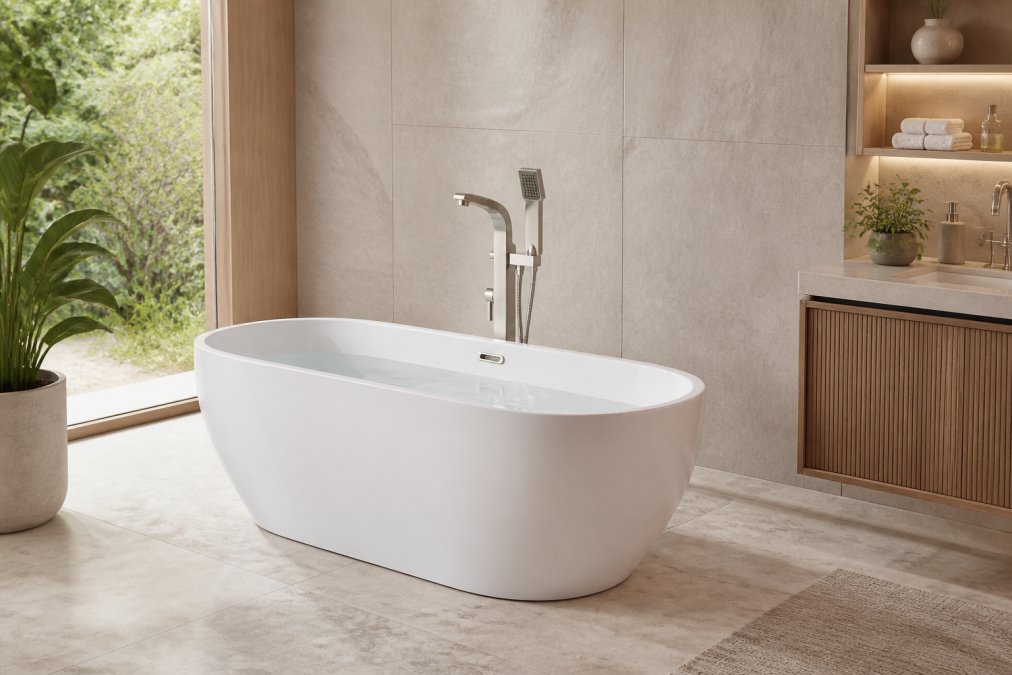
How to Design a Timeless Spa Bathroom
Table of Contents
- What You'll Need Before You Start Your Spa Bathroom Design
- Step 1: Choose the Best Materials for Luxury Bathrooms
- Step 2: Build a Calming, Neutral Color Palette
- Step 3: Apply Spa Bathroom Lighting Ideas That Actually Relax
- Step 4: How to Choose Bathroom Fixtures for a Timeless Spa Bathroom
- Step 5: Eliminate Clutter with Smart Storage Solutions
- Step 6: Small-Space Spa Bathroom Transformations
- Common Mistakes to Avoid in Spa Bathroom Design
Last Updated: August 22, 2026
What You'll Need Before You Start Your Spa Bathroom Design
A spa bathroom is a private retreat designed around sensory calm, material quality, and deliberate simplicity. Before you spend a dollar, gather these essentials:
- Floor plan with accurate dimensions, including ceiling height, window placement, and existing plumbing locations
- A realistic budget range, as fixtures, materials, labor, and finishing details each carry significant cost weight
- A priority list, deciding whether the soaking tub, walk-in shower, or lighting scheme is your non-negotiable anchor piece
- Inspiration references, collected images that share a common thread rather than a random mix of styles
- Ventilation and waterproofing plan, as moisture management is foundational to material longevity
A common mistake is skipping the priority list. Homeowners often try to include every luxury element and end up with a cluttered, incoherent result. Decide what the room is for, deep soaking, meditative showering, or quiet morning routines, and let that anchor every decision that follows.
Step 1: Choose the Best Materials for Luxury Bathrooms
The best materials for luxury bathrooms age well, feel distinctive to the touch, and reward maintenance rather than punishing neglect. Trend-chasing here is expensive and frustrating.
Natural Stone and Marble Surfaces
Marble surfaces remain the benchmark for spa-inspired design because they carry visual warmth and veining that no manufactured alternative fully replicates. Honed finishes are more forgiving than polished ones, hiding scratches and water marks more gracefully in high-humidity environments.
Natural stone does require sealing. For marble and limestone, plan on resealing annually. Slate and granite are denser and need less frequent attention. According to National Kitchen and Bath Association design guidelines, specifying the correct grout and sealant for stone type is one of the most overlooked steps in bathroom renovations.
Teak accents on bath trays, floor mats, or shelving pair exceptionally well with stone because the organic grain softens the mineral hardness of marble, a hallmark of high-end resort spa design.
Sustainable and Eco-Friendly Options
Sustainable materials aren't a compromise; many are genuinely superior performers. Recycled glass tile is dense and non-porous. Bamboo is harder than most hardwoods and naturally moisture-resistant. Reclaimed wood adds warmth and texture when properly sealed. Low-VOC adhesives and grouts are critical for indoor air quality in enclosed, ventilated spaces.
As documented in EPA guidance on indoor air quality and building materials, volatile organic compounds from standard adhesives can accumulate in poorly ventilated spaces. Specifying low-VOC products at the material stage costs little extra and pays off in air quality over the renovation's life.
Step 2: Build a Calming, Neutral Color Palette
The most enduring spa bathrooms use color with surgical precision, a narrow range of tones that shift in temperature and saturation rather than hue. A timeless palette typically anchors around warm whites, soft greiges, or cool stone grays, with the floor slightly darker than walls, walls slightly darker than ceiling.
What separates a calming palette from a flat one is texture. Two surfaces in the same color read completely differently when one is honed marble and the other is matte plaster. Organic materials carry inherent tonal variation that prevents a neutral room from feeling sterile.
| Element | Recommended Tone | Finish |
|---|---|---|
| Floor tile | Warm greige or charcoal | Honed or matte |
| Wall tile | Soft white or pale stone | Matte or satin |
| Ceiling | Bright white | Flat |
| Vanity | Natural wood or matte white | Satin |
| Textiles | Warm cream or ivory | Waffle or terry |
| Fixtures | Brushed nickel or matte black | Satin |
Avoid cool-toned whites with warm-toned stone; the temperature clash reads as a mistake. Pull your fixture and tile samples together in natural light before committing.
Step 3: Apply Spa Bathroom Lighting Ideas That Actually Relax
Lighting is the single most underinvested element in bathroom renovations. Most homeowners budget generously for tile and fixtures, then treat lighting as an afterthought, resulting in beautiful rooms that feel clinical under harsh overhead light.
Layered Lighting Techniques
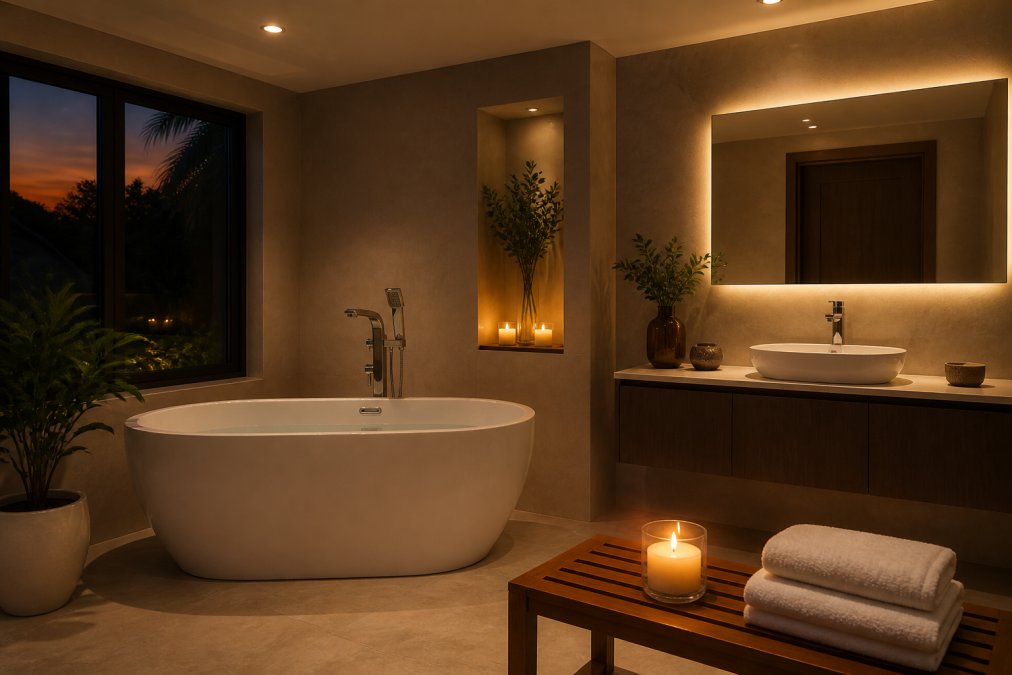
A layered lighting scheme combines three types of illumination: ambient lighting (dimmable recessed fixtures at 2700K-3000K), task lighting (positioned at eye level beside the vanity mirror, not overhead), and accent lighting (LED strips under floating cabinets or along toe-kicks). Dimmable lighting is non-negotiable; all fixtures should be on separate dimmer circuits.
Acoustic Design: The Overlooked Comfort Layer
Sound is as much part of a spa experience as visuals. Most bathrooms are acoustically hostile, hard surfaces everywhere, no sound absorption, mechanical noise from fans and pipes.
Simple interventions make a real difference: specify exhaust fans rated at 0.3 sones or lower (standard fans run at 1.5-4 sones), use thick bath textiles to absorb mid-frequency sound, install a solid-core door for acoustic separation, and insulate pipes with foam sleeves to reduce ticking and rushing sounds.
According to Acoustical Society of America resources on residential acoustics, hard parallel surfaces in small rooms create standing waves that amplify certain frequencies. Breaking up parallel surfaces with a large bath mat, wood element, or textile wall panel makes an audible difference.
Step 4: How to Choose Bathroom Fixtures for a Timeless Spa Bathroom
Choosing bathroom fixtures for a spa bathroom means prioritizing architectural silhouette over decorative detail. Clean lines and minimal ornamentation age far better than heavily embellished alternatives. Brushed nickel and matte black have shown more staying power than polished chrome or gold.
Freestanding Soaking Tubs
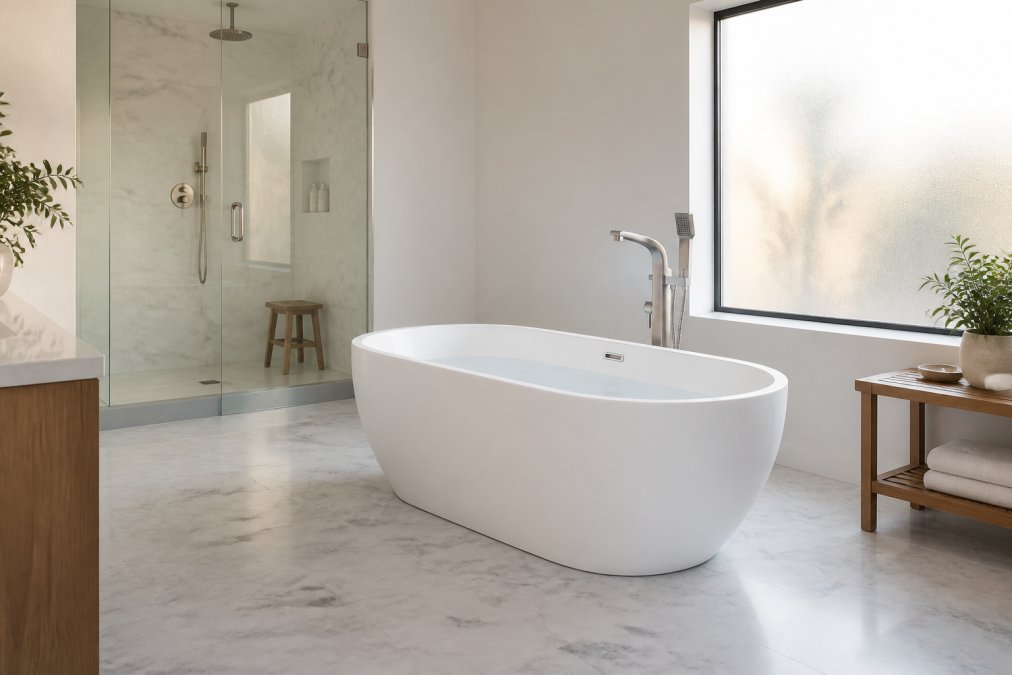
A freestanding tub is the visual anchor of a spa bathroom. The Trone Bryn 67" x 30" Freestanding Soaker Tub ($2,200) delivers a classic rectangular profile with clean, minimalist aesthetics. For a deeper soak, the Trone Roshelle 66" x 32" Freestanding Acrylic Soaker Tub ($2,800) invites full-immersion relaxation. Position the tub where it can be seen from the doorway, it should read as a destination, not an afterthought.


Walk-In Shower Design and Rain Showerheads
A well-designed walk-in shower creates a sensory experience through water pressure, coverage, and temperature control. Ceiling-mounted rain showerheads with a wide spray face (10 inches or larger) deliver the closest approximation to natural rainfall. Pair it with a handheld fixture on a slide bar for practical flexibility. Frameless glass enclosures maintain visual continuity with the rest of the room.
Step 5: Eliminate Clutter with Smart Storage Solutions
Clutter-free surfaces are the fastest path to a spa-like atmosphere. Everything used daily should be accessible but not visible.
Effective storage strategies include recessed wall niches built into shower walls at tile installation, floating vanities that make rooms read larger, deep drawer organizers with custom inserts, wall-mounted towel warmers that serve dual duty as storage and luxury feature, and vanity organization inserts that prevent cabinet interiors from becoming chaotic.
One well-designed floating vanity with deep drawers outperforms three poorly organized cabinets. Invest in interior fittings, not just cabinet exteriors.
Step 6: Small-Space Spa Bathroom Transformations
Small bathrooms are not a design liability; they're a focus constraint that produces better decisions. The most common mistake is trying to replicate a large bathroom at reduced scale. The correct approach is to choose fewer elements and execute each one at higher quality.
Specific strategies include large-format tile (24" x 24" or larger) with minimal grout lines, floor-to-ceiling tile on one wall for height, and frameless glass shower enclosures to keep sightlines open. A 60" freestanding tub works in bathrooms as small as 8' x 10' with proper planning. Wall-mounted faucets free up counter space. A single potted plant, teak bath tray, or natural stone soap dish carries the material palette through to smallest details.
Biophilic design principles, the human tendency to respond positively to natural materials and living elements, apply regardless of room size. A small bathroom with genuine stone, a living plant, and warm wood accents will feel more restorative than a large bathroom with synthetic materials and harsh lighting.
Common Mistakes to Avoid in Spa Bathroom Design
1. Choosing finishes before confirming the lighting plan Tile and fixture samples look completely different under warm versus cool light. Evaluate materials under actual lighting temperature.
2. Underspecifying ventilation Specify an exhaust fan sized for the room's cubic footage, not just square footage; ceiling height matters.
3. Ignoring maintenance requirements at selection stage Natural stone requires annual sealing. Polished chrome shows water spots. Know the maintenance commitment before committing to a material.
4. Treating the soaking tub as a storage surface A freestanding tub that becomes a laundry holder undermines the entire spa concept.
5. Skipping the acoustic layer A bathroom that sounds like an echo chamber cannot feel like a sanctuary, regardless of visual quality.
6. Over-accessorizing Spa design is edited, not maximalist. A single piece of art, one plant, and a well-chosen teak accessory outperform a shelf crowded with objects.
According to NAHB remodeling cost and value data, bathroom renovations consistently rank among the highest-return home improvement projects when executed with durable, quality materials.
A spa bathroom that holds up over time is the product of disciplined decisions made early: materials chosen for longevity, fixtures selected for architectural permanence, lighting designed for flexibility, and storage built to keep surfaces clear. The sensory experience you're after, calm, warmth, genuine quiet, follows from those structural choices, not from decorative additions layered on top.
Crestpoint Home's curated selection of freestanding soaking tubs and bathroom fixtures is built around exactly this philosophy: products designed to perform beautifully for years, backed by a support team that helps you make confident selections. Shop the collection and find the fixtures that anchor your spa bathroom design.
Frequently Asked Questions
What are the essential elements of a spa-inspired bathroom?
A timeless spa bathroom relies on five core elements: natural materials like marble or stone, a calming neutral color palette, layered ambient lighting with dimmable controls, clutter-free storage, and high-end fixtures such as a freestanding soaking tub or rain showerhead. Textural finishes, teak accents, and heated floors add sensory depth. The goal is a sanctuary that feels serene every day, not just on special occasions.
What color palettes work best for a timeless spa bathroom?
Neutral palettes built around warm whites, soft greiges, muted sage, and deep charcoal age the best. These tones reflect natural light, complement organic materials like marble and wood, and avoid the trend cycles that make bolder colors feel dated. Pair a dominant neutral with one warm accent, such as brushed brass hardware or teak shelving, to add warmth without sacrificing the minimalist aesthetic.
Which materials are most durable and timeless for bathroom renovations?
Marble, natural stone, and porcelain tile consistently outperform trendy alternatives for longevity. Marble surfaces require sealing every one to two years to resist staining, but they remain structurally sound for decades. Acrylic freestanding tubs resist chipping and hold heat well. For wet zones, large-format porcelain with minimal grout lines reduces maintenance. Teak is the preferred wood for spa accessories because it naturally resists moisture and mildew.
How do I make a small bathroom feel like a luxury spa?
Focus on vertical space and reflective surfaces. A floor-to-ceiling tile in a single neutral tone makes the room read as larger. Replace a standard shower curtain with frameless privacy glass to open the visual field. Choose a compact freestanding tub or a deep soaker insert rather than a standard alcove tub. Dimmable lighting, a heated towel bar, and a single quality fixture upgrade, like a rain showerhead, deliver a spa-like sensory experience without requiring extra square footage.
This article was written using GrandRanker


