

How to Choose Timeless Bathroom Fixtures
Table of Contents
- What Makes Timeless Bathroom Fixtures Different From Trendy Ones
- Best Bathroom Faucet Finishes for Longevity
- Durable Bathroom Fixture Materials That Stand the Test of Time
- How to Mix Metal Finishes in the Bathroom Without Clashing
- Choosing Timeless Bathroom Fixtures: Installation and Compatibility
- Sustainability, Water Efficiency, and Long-Term Value
- Budgeting for a Bathroom Renovation That Lasts
- Conclusion
Last Updated: August 21, 2026
What Makes Timeless Bathroom Fixtures Different From Trendy Ones
Timeless bathroom fixtures remain visually coherent and functionally relevant across decades, regardless of shifting design trends. At Crestpoint Home, we hear this concern from homeowners constantly: "I don't want to spend serious money on a renovation that looks dated in five years." The answer lies in understanding what separates enduring design from a trend cycle.
The core distinction is intent. Trendy fixtures chase a moment. Timeless fixtures are built around principles that predate any particular era and will outlast the next one.
Classic Silhouettes and Visual Simplicity
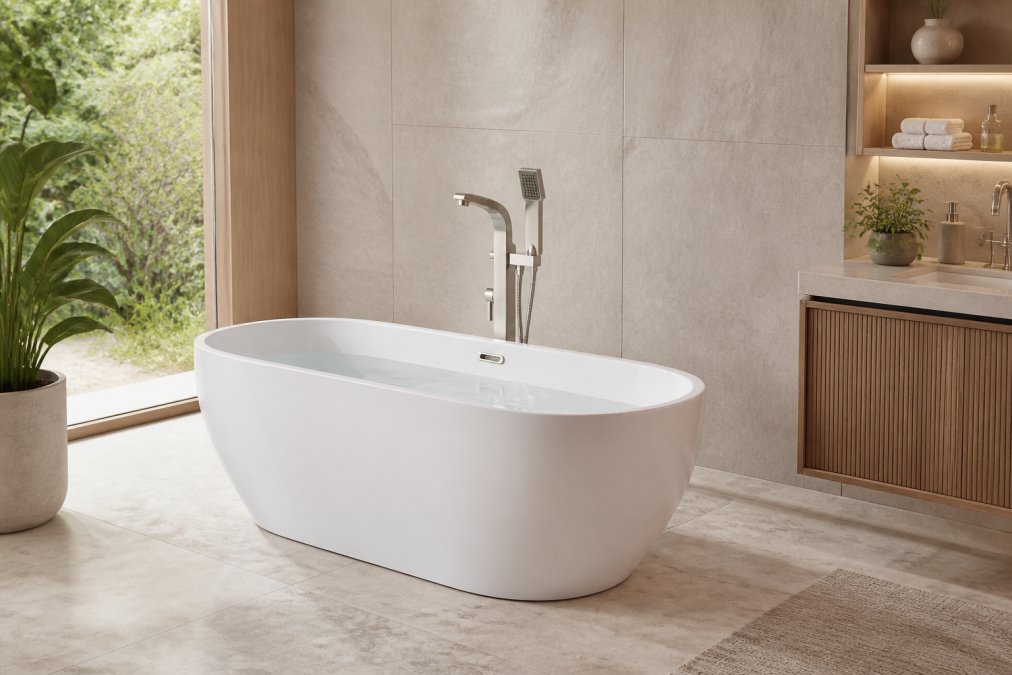
Classic silhouettes are fixture shapes derived from established architectural traditions rather than seasonal design movements. Think clean rectangular profiles, gently curved freestanding tubs, and cross-handle faucets with symmetrical proportions. These forms have appeared in bathrooms for over a century because they work spatially and aesthetically at almost any scale.
Visual simplicity is the companion principle. A fixture with minimal ornamentation draws attention to quality of material and finish rather than decorative complexity. Ornate details anchor a design to a specific decade. A clean-lined faucet with a single lever reads as current in 2026 just as it did in 1996.
A common mistake is confusing "simple" with "cheap." The best classic silhouettes carry visual weight through proportion and material density, not decoration.
Neutral Palettes and Clean Lines That Age Well
The neutral palette principle extends beyond wall color to every fixture surface. White, off-white, matte stone tones, and warm gray don't compete with each other or the architecture.
Clean lines in fixtures reinforce architectural integrity. A faucet with sharp geometric transitions or a tub with a consistent radius curve adds structure without imposing a style identity. This is why clean lines age well: they support the room rather than dominating it.
Best Bathroom Faucet Finishes for Longevity
The best bathroom faucet finishes for longevity have proven surface durability, low maintenance requirements, and visual character that doesn't depend on trend cycles. Finish selection is one of the highest-stakes decisions in a bathroom renovation because it touches every visible surface simultaneously: faucets, towel bars, drain covers, and cabinet hardware.
Brushed Nickel and Polished Chrome
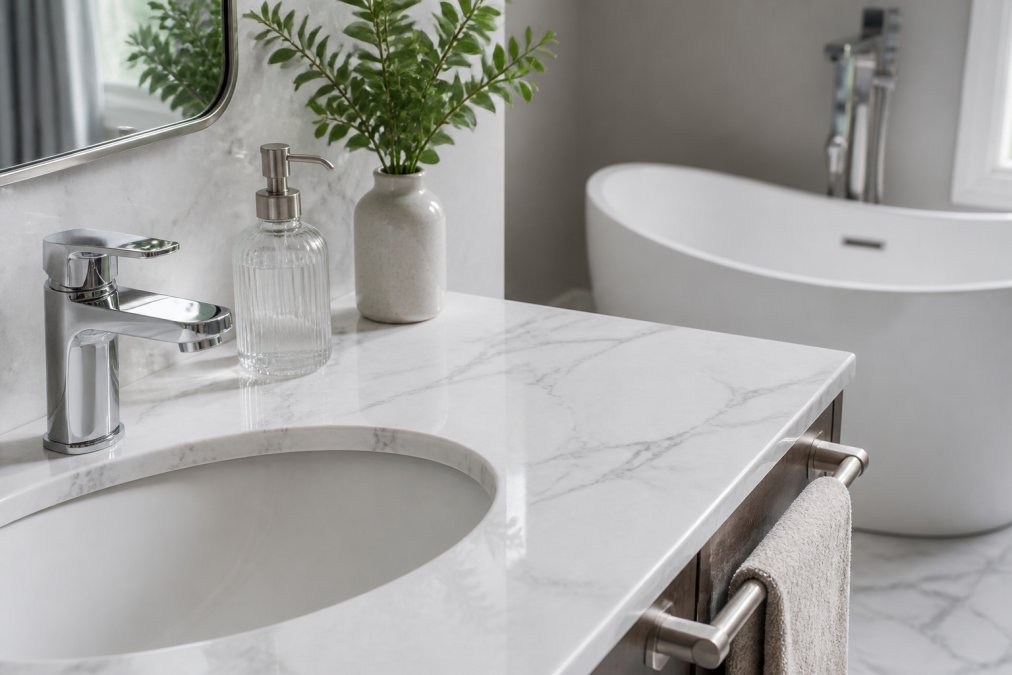
Brushed nickel has become one of the most enduring hardware finishes in American bathrooms. The matte texture masks water spots and minor surface wear far better than high-gloss alternatives. Its warm silver tone reads as both contemporary and transitional, which means it doesn't lock you into a single design aesthetic.
Polished chrome is the classic benchmark. It has appeared in bathrooms since the early twentieth century and remains the finish most plumbing engineers use as a reference point. Its reflectivity adds brightness to smaller spaces, and its durability is exceptional when properly maintained. The trade-off is visibility: polished chrome shows water spots and fingerprints readily, requiring consistent cleaning.
Both finishes are widely available across price points and have deep compatibility with standard plumbing fixtures, which matters when you eventually need to replace a single component.
Unlacquered Brass and Matte Black
Unlacquered brass develops a natural patina over time. Many homeowners find this aging process adds character, making it genuinely timeless rather than trendy. The caveat: patina development is uneven and unpredictable. If you prefer controlled consistency, lacquered brass or brushed gold is safer.
Matte black is the most recent addition to the timeless conversation. Its longevity rests on design neutrality: it reads as architectural rather than decorative. Surface wear is the primary concern. Prioritize fixtures with PVD coating for better long-term wear resistance.
Durable Bathroom Fixture Materials That Stand the Test of Time
Durable bathroom fixture materials maintain structural integrity, surface quality, and aesthetic consistency under daily exposure to water, heat fluctuations, and cleaning agents. Material quality is the foundation that finish and form are built on.
Cast Iron, Natural Stone, and Acrylic
Cast iron is the historical benchmark for bathtub durability. Its mass provides excellent heat retention, and its porcelain enamel surface resists scratching and staining. The challenge is weight: cast iron tubs can exceed 300 pounds empty, requiring structural floor assessment. Enameled steel offers a middle ground with reduced heat retention.
Natural stone, most commonly in vessel sinks and countertop surrounds, brings genuine material quality and subtle textures. Marble and travertine remain popular choices. Both require periodic sealing to prevent water absorption and staining. Properly maintained, natural stone surfaces outlast the renovation itself.
Acrylic is the most practical choice for freestanding tubs in most residential settings. Modern acrylic is reinforced with fiberglass backing, providing structural rigidity while keeping weight manageable. It retains heat well, resists household cleaning agents, and can be refinished if scratches develop. The Trone Cloe freestanding acrylic soaker tub from Crestpoint Home exemplifies this balance: a 59" x 32" format with graceful curves and radiant white finish that reads as spa-quality. The Trone Zion at 67" x 31" offers a larger footprint, while the Trone Bryn provides a classic rectangular profile at 67" x 30".

How to Mix Metal Finishes in the Bathroom Without Clashing
Most guides treat metal mixing as a rule to avoid. The more accurate framing: mixing metals without a system creates clashing; mixing metals with a system creates depth.
The practical framework operates on three principles:
- Establish a dominant finish. One metal should appear on the highest-frequency fixtures: faucets, shower controls, and towel bars. This anchors the room.
- Use an accent finish intentionally. A second metal can appear on lower-frequency elements: cabinet hardware, mirror frames, or lighting fixtures. Limit this to one accent.
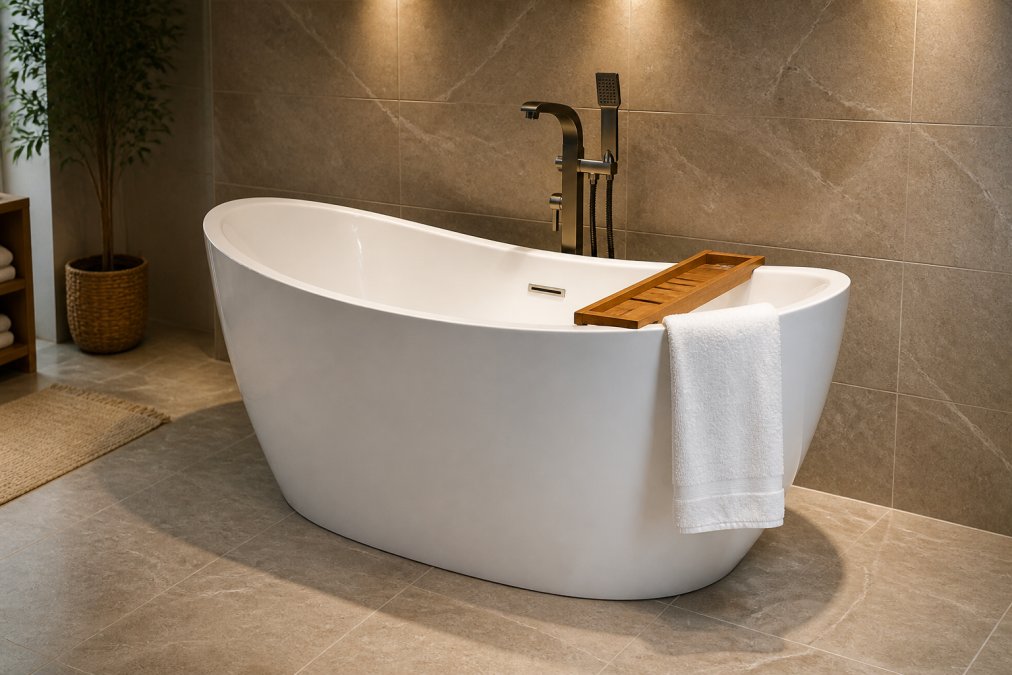
- Match undertones, not shades. Brushed nickel and polished chrome share cool silver undertones and work together. Unlacquered brass and brushed gold share warm yellow undertones. Crossing warm and cool tones without a strong neutral backdrop fails.
According to National Kitchen and Bath Association design guidelines, cohesive hardware selection is one of the most cited factors in bathroom renovation satisfaction. Hardware is small in scale but high in frequency, and visual inconsistency registers subconsciously.
A fourth principle: visual weight distribution. A heavy, sculptural faucet in brushed nickel paired with delicate cabinet pulls in the same finish creates imbalance. Match the visual weight of your metals as carefully as their color temperature.
Choosing Timeless Bathroom Fixtures: Installation and Compatibility
Choosing timeless bathroom fixtures is only half the decision. The other half is whether those fixtures will work with your existing plumbing infrastructure. This is where many renovations stall.
Plumbing Rough-In and Valve Compatibility
Plumbing rough-in refers to the placement of supply lines, drain locations, and valve bodies within the wall before finish surfaces are applied. Every fixture you select must align with your existing rough-in dimensions, or you face the cost of moving plumbing.
The most critical compatibility check is valve compatibility for shower and tub controls. Many fixtures use proprietary valve bodies, meaning the trim kit you want may only work with a specific valve brand. Confirm valve compatibility before purchasing any shower fixture.
Key rough-in specifications to verify:
- Faucet hole spacing (standard is 4" center-set or 8" widespread)
- Drain location for freestanding tubs (floor-mount vs. end-drain)
- Shower valve rough-in depth (typically 3" to 4")
- Supply line size and material compatibility
As documented in International Plumbing Code guidelines, fixture installation must meet minimum flow and pressure requirements. Confirming these specifications before purchase prevents costly returns.
Universal Design and Accessibility
Universal design creates spaces that function effectively for people across a range of ages, body types, and physical abilities without requiring specialized adaptation.
For bathroom fixtures, this means lever-style faucet handles instead of knobs (easier to operate with limited grip strength), curbless shower entries, and comfort-height toilets. These choices don't compromise aesthetic quality. A lever-handle faucet in brushed nickel is no less elegant than a cross-handle version and serves the space better across a homeowner's life.
The Americans with Disabilities Act accessibility guidelines provides a technical framework for accessible bathroom design that serves as a useful reference even in non-commercial renovations.

Sustainability, Water Efficiency, and Long-Term Value
Sustainability in fixture selection operates on two levels: environmental impact and financial durability.
Water efficiency is the most quantifiable sustainability factor. The EPA WaterSense program standards certifies fixtures that use at least 20% less water than standard models without sacrificing performance. WaterSense-labeled faucets, showerheads, and toilets carry this certification. For households running multiple bathrooms, cumulative water savings over a decade are substantial.
Material sustainability affects long-term value in a less obvious way: durable materials requiring less frequent replacement have a lower lifetime environmental footprint than cheaper alternatives needing replacement every five to ten years. A higher upfront cost for a cast iron tub or solid brass faucet body reduces replacement frequency and associated waste.
Fixture longevity also affects resale value. Bathrooms remain one of the highest-return renovation categories in residential real estate. Fixtures that read as quality retain their appeal to future buyers in ways heavily trend-driven choices do not.
Budgeting for a Bathroom Renovation That Lasts
Budgeting for timeless bathroom fixtures requires a different mental model than standard renovations. The goal is not to minimize upfront cost but to minimize cost per year of service.
Divide your budget into three tiers based on fixture visibility and replacement difficulty:
| Fixture Category | Priority Tier | Rationale |
|---|---|---|
| Faucets and shower controls | Tier 1 (highest) | High visibility, high interaction frequency, complex to replace |
| Bathtub or shower base | Tier 1 (highest) | Structural, expensive to replace, defines room aesthetic |
| Towel bars and accessories | Tier 2 (mid) | Visible but easier to replace if trends shift |
| Toilet | Tier 2 (mid) | Functional priority; design impact is secondary |
| Cabinet hardware | Tier 3 (lower) | Lowest replacement cost; easiest to update |
Allocate the largest share of your budget to Tier 1 items. These define the room's character, interact with plumbing rough-in most directly, and carry the highest replacement labor cost.
For freestanding tubs, the Trone Bella from Crestpoint Home at $2,800 offers a distinctive boat-bow silhouette in a 66" x 30" format. The Trone Cloe at $3,000 provides a 59" x 32" format with sweeping curves suited to smaller footprints. Both represent Tier 1 investments with material quality and classic silhouettes that justify the allocation.

A common mistake is over-investing in decorative accessories and under-investing in plumbing fixtures. Grout color and towel hooks can be updated for a few hundred dollars. The faucet valve body cannot.
Choosing fixtures that hold up over time is harder than it looks, mostly because the design industry profits from trend cycles. Crestpoint Home's curated selection of bathroom fixtures is built around the opposite principle: products chosen for material quality, classic silhouettes, and long-term functional value. Our support team is available by phone, email, or live chat to help you match fixtures to your specific rough-in configuration and design goals. Explore the collection and make a selection you won't reconsider in five years.
Frequently Asked Questions
What bathroom fixture finish is the most timeless?
Brushed nickel and polished chrome consistently rank as the most timeless hardware finishes because their neutral tone pairs with virtually any color palette and resists obvious surface wear over time. Unlacquered brass has also proven its staying power across decades of design cycles. All three deliver finish durability that matte or highly trendy options often cannot match, making them reliable choices for a long-term bathroom renovation.
How do I keep my bathroom fixtures looking cohesive?
Cohesive design comes from selecting a single dominant finish and repeating it across every fixture: faucet, towel bars, toilet hardware, and shower fittings. If you mix metals, limit yourself to two finishes and anchor the scheme with one dominant choice. Matching the hardware finish on cabinetry to your plumbing fixtures ties the room together visually. Consistent grout color and a neutral palette further reinforce that unified, intentional look.
Are matte black or polished nickel fixtures more timeless?
Polished nickel sits closer to the timeless end of the spectrum. Its reflective surface has appeared in classic bathroom design for well over a century and coordinates easily with both warm and cool color schemes. Matte black is popular right now but carries more design-trend risk over a 10-to-20-year horizon. If design longevity is your priority, polished nickel or brushed nickel is the safer investment for a bathroom renovation.
What are the most common mistakes that make a bathroom look dated quickly?
The biggest mistakes include choosing finishes tied to a single moment in design trends, such as heavily ornate hardware or highly saturated accent colors, and selecting fixtures with complex detailing that clashes with architectural integrity. Mismatched metal finishes across plumbing fixtures and hardware is another common problem. Skipping a neutral palette in favor of bold tile patterns, or choosing fixtures without confirming valve compatibility with existing plumbing rough-in, can also create costly problems later.
This article was written using GrandRanker