

Is Premium Kitchen Hardware Worth the Price?
Table of Contents
- What Makes Premium Kitchen Hardware Different
- Signs of High Quality Kitchen Hardware
- Solid Brass vs Zinc Cabinet Hardware: The Material Difference
- Average Cost of Kitchen Cabinet Hardware and What You Get
- Durability: How Long Premium Hardware Actually Lasts
- When to Invest in Premium Hardware vs When to Save
- The Resale Value Factor
- Conclusion
Last Updated: August 28, 2026
What Makes Premium Kitchen Hardware Different
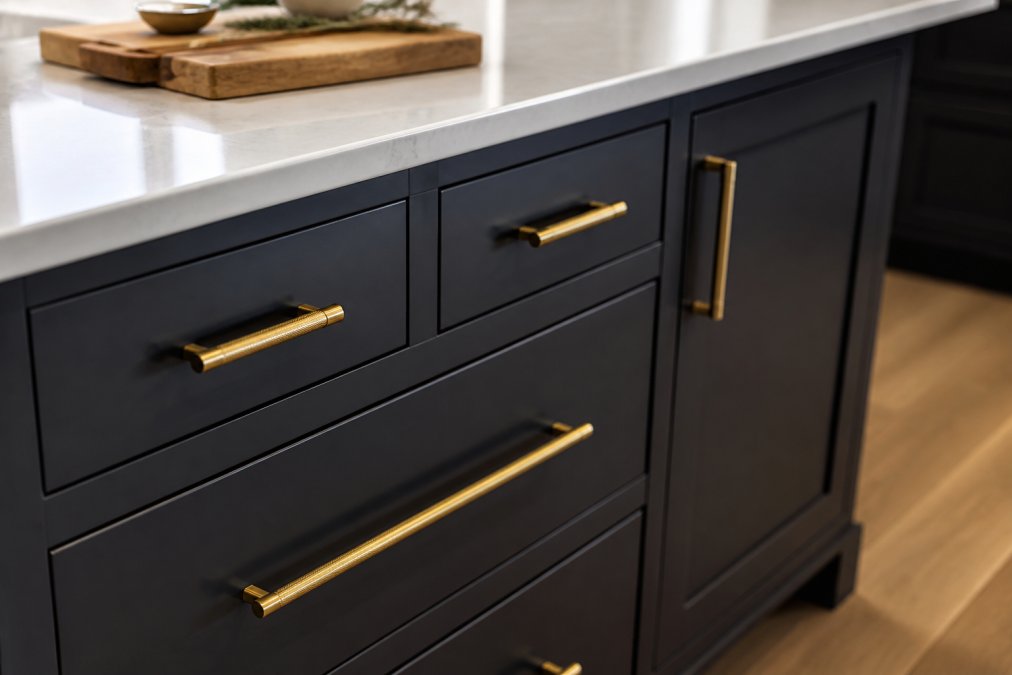
Premium kitchen hardware stands apart from basic alternatives through material composition, manufacturing precision, and finish quality. The difference isn't just aesthetic, it's tactile, functional, and measurable in how long these pieces perform under daily use.
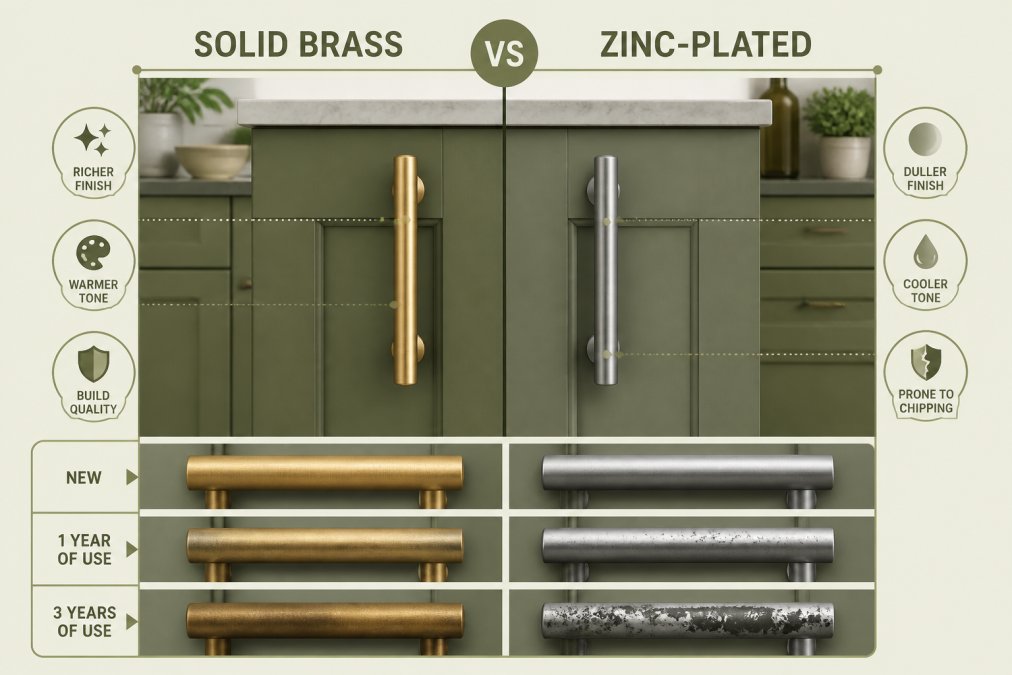
The core distinction lies in what's beneath the surface. Budget hardware typically uses zinc alloy or pot metal as a base, then applies a thin coating to mimic more expensive finishes. Premium hardware, by contrast, starts with solid brass or high-grade stainless steel. Solid brass is denser, heavier, and naturally corrosion-resistant. It doesn't just look better initially; it ages better. When a zinc-plated knob wears through its coating after a few years, you see dull metal underneath. When solid brass wears, it develops a patina, a protective oxidation layer that actually enhances its character.
At Crestpoint Home, homeowners often underestimate how much they interact with hardware. Cabinet knobs and drawer pulls are touched hundreds of times per year. They're among the most-used fixtures in a kitchen. That frequency of contact is precisely why material quality matters. A cheap knob might feel hollow and rattle slightly when you pull. A quality knob feels substantial, pulls smoothly, and responds with precision to your hand.
The manufacturing process also separates premium from standard. Budget hardware is often cast in molds and finished quickly. Premium hardware is typically forged or machined, which creates denser material and tighter tolerances. The mounting hardware, the bolts, washers, and backing plates, is also heavier and more durable in premium options. This prevents the wobble and loosening that plagues cheaper alternatives over time.
Signs of High Quality Kitchen Hardware
Understanding what signals quality helps you evaluate whether a piece justifies its price tag. Several specific markers indicate hardware built to last rather than hardware built to cost less.
Material Composition and Weight
Pick up two cabinet knobs side by side, one budget, one premium. The weight difference is immediate and telling. Solid brass weighs roughly 8.5 grams per cubic centimeter (peer-reviewed research). Zinc alloy weighs around 7.1 grams per cubic centimeter. That difference in density means solid brass pieces feel substantial and substantial usually means durable.
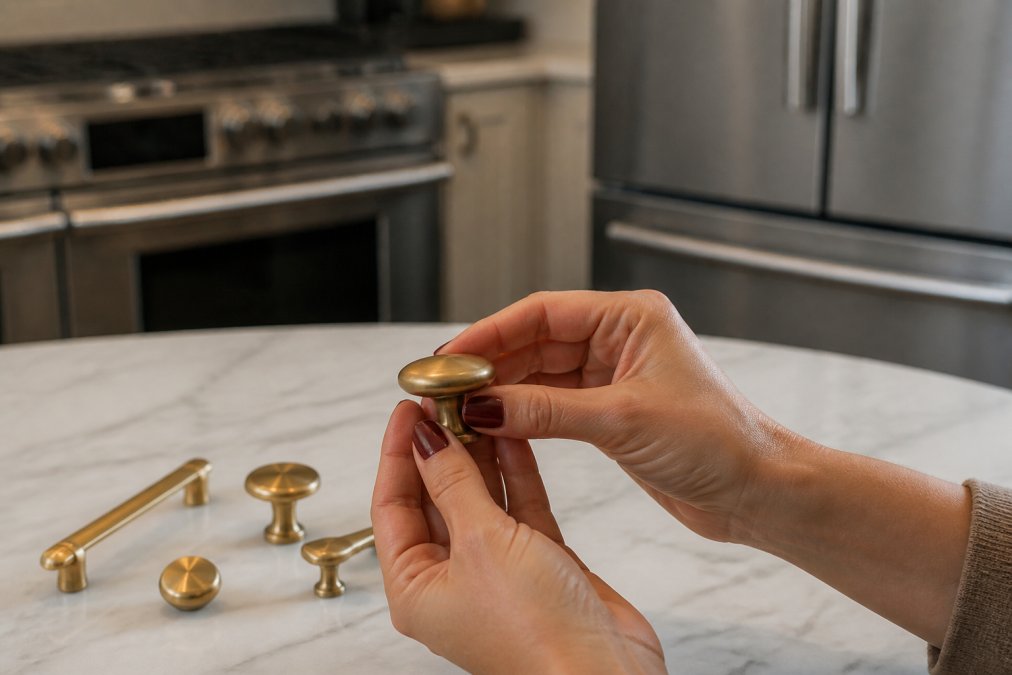
Look beyond the surface finish. Run your fingers across the knob or pull. Quality hardware has smooth, consistent surfaces with no rough edges or casting imperfections. The edges should be sharp and precise, not rounded from over-finishing. If you can see seams or visible joints where pieces were assembled, that's a sign of lower manufacturing standards.
Check the back of the hardware too. Premium pieces have finished backs, not raw metal or obvious casting marks. The threaded holes should be cleanly cut, not stripped or misaligned. When you hold a quality piece, you should feel no flex or give, it's rigid and solid.
Finish Durability and Corrosion Resistance
The finish is what you see every day, and it's also what protects the underlying metal. Premium hardware uses multiple finish types, each chosen for specific performance characteristics.
Solid brass naturally resists corrosion because brass itself is an alloy of copper and zinc that oxidizes protectively. When you apply a lacquer finish to solid brass, you're adding an extra protective layer. PVD coatings (physical vapor deposition) create an ultra-thin, extremely durable surface that resists fingerprints, tarnishing, and wear. Electroplated finishes on quality hardware are thicker and more uniform than on budget alternatives.
Run your finger across the finish. It should feel smooth and consistent. Any rough spots, pitting, or uneven texture indicates lower-quality plating or coating. Quality finishes also have a reflective depth, they catch light consistently rather than appearing flat or dull.
Look at how the finish meets the hardware body. On quality pieces, the finish line is clean and even. On cheaper hardware, you'll often see inconsistencies, drips, or areas where the coating is visibly thinner.
Solid Brass vs Zinc Cabinet Hardware: The Material Difference
These two materials represent the primary divide in the hardware market, and understanding their differences explains much of the price gap.
Solid Brass Hardware
Solid brass is an alloy of copper (typically 60-70%) and zinc (30-40%) (usgs.gov). This composition creates a material that's naturally antimicrobial and corrosion-resistant. Brass doesn't rust in the traditional sense because it doesn't contain iron. Instead, it develops a patina, a protective layer of oxidation that actually strengthens the material underneath.
Solid brass hardware is heavier, denser, and more expensive to manufacture because it requires more precise machining. It's also more expensive to source because brass prices fluctuate with copper markets. The density of solid brass means it can be cast or forged into more intricate designs without losing structural integrity. A delicate brass knob won't flex or crack under normal use.
Over time, solid brass develops character. Fingerprints and oils create natural wear patterns that many homeowners find appealing. If you prefer a consistent finish, solid brass can be maintained with regular polishing. The key advantage: if the finish ever wears through, the underlying brass is still protective and attractive.
Zinc Alloy Hardware
Zinc alloy (also called zamak or pot metal) is cheaper to produce and faster to cast. It's lighter, which reduces material costs. Zinc alloy hardware is typically plated with chrome, nickel, or other finishes to provide corrosion resistance because zinc itself oxidizes quickly and unevenly.
The problem emerges over years of use. When the plating wears through, and it will, eventually, the zinc underneath begins to oxidize visibly. You'll see dull spots, discoloration, and eventually corrosion. Zinc-plated hardware can't be refinished easily because the base metal is too soft and porous to take a new coating well.
Zinc alloy hardware also tends to feel lighter and sometimes hollow. It can rattle in its mounting, and the threads can strip more easily because the base metal is softer. For a kitchen that gets heavy use, zinc alloy hardware typically lasts 5-10 years before visible degradation (astm.org). Solid brass, properly maintained, can last 20-30 years or longer.
Average Cost of Kitchen Cabinet Hardware and What You Get
Understanding the pricing structure helps you make informed decisions about where to invest.
Budget hardware typically ranges from $3 to $8 per piece. This is zinc alloy with a basic chrome or nickel plating. The finish is thin, the base metal is soft, and the hardware will likely need replacement within 5-10 years.
Mid-range hardware costs $15 to $40 per piece. At this level, you might find solid brass options or higher-quality zinc alloy with better plating. The manufacturing is more precise, the finishes more durable. This is where many homeowners find good value, better longevity than budget hardware without the premium price tag.
Premium hardware starts at $50 and can exceed $200 per piece for designer or specialty items. At this level, you're getting solid brass, precision manufacturing, and finishes like PVD coatings that offer exceptional durability. The hardware feels substantial, performs flawlessly, and ages gracefully.
What separates these price tiers? Material density, finish quality, manufacturing precision, and the hardware's ability to age well. A $60 solid brass knob isn't just a $20 knob with a higher markup, it's made from denser material, finished more carefully, and designed to perform consistently for decades.
For a typical kitchen renovation with 30-40 cabinet pulls and knobs, budget hardware costs $100-$300 total. Mid-range runs $450-$1,600. Premium hardware for the same kitchen runs $1,500-$8,000 or more. These numbers assume you're replacing all visible hardware consistently, which creates aesthetic coherence and ensures longevity across your cabinetry.
Durability: How Long Premium Hardware Actually Lasts
This is where the price premium becomes most defensible. Premium hardware isn't just nicer now, it's still nice in 15 years.
Budget hardware typically shows visible wear within 3-5 years. Plating wears through in high-contact areas. Knobs develop a dull, worn appearance. Drawers may stick or rattle because the hardware has loosened. By 8-10 years, many homeowners replace budget hardware out of necessity, not preference.
Mid-range solid brass hardware typically lasts 10-15 years with minimal maintenance. The finish remains attractive, the hardware performs smoothly, and there's no functional degradation. If you're planning to stay in your home long-term, this is often the sweet spot for value.
Premium hardware, properly installed and maintained, lasts 20-30 years or longer. The solid brass base means it can be refinished if desired. The precision manufacturing means nothing loosens or rattles. The finish, whether lacquered brass or PVD-coated, remains consistent and attractive through decades of use.
The durability advantage compounds when you consider replacement costs. Replacing hardware in a 10-year-old kitchen costs money and disruption. Premium hardware installed correctly the first time eliminates that future expense and hassle. For homeowners planning to stay in their homes long-term, that's a significant advantage.
When to Invest in Premium Hardware vs When to Save
Not every kitchen requires premium hardware everywhere. Strategic investment yields better returns than blanket premium purchasing.
Invest in Premium Hardware When:
You're renovating a kitchen you plan to keep long-term. If you'll be in this home for 15+ years, premium hardware pays for itself through longevity and reduced replacement costs.
Visible hardware will be heavily used. Frequently-touched cabinet pulls and drawer handles wear faster than decorative knobs on upper cabinets. Invest premium dollars in the hardware you actually use constantly.
You want design consistency. Premium hardware lines offer more refined aesthetics and finish options. If you're creating a cohesive design statement, premium hardware elevates the overall effect.
You're doing a high-end kitchen renovation. In a $50,000+ kitchen project, premium hardware represents a small percentage of total cost but significantly impacts the finished quality and longevity.
Consider Saving When:
You're renting or planning to move within 5 years. Budget or mid-range hardware is sufficient for short-term occupancy. The hardware won't need replacement during your tenure.
You're doing a budget renovation with limited funds. Focus premium spending on cabinets, countertops, and appliances, the major cost drivers. Use mid-range hardware to keep overall costs reasonable.
The hardware is decorative or rarely touched. Upper cabinet knobs that are accessed infrequently can be budget hardware without consequence. Save premium dollars for frequently-used drawer pulls.
You prefer to replace hardware periodically for design updates. Some homeowners like refreshing hardware every 5-7 years to match evolving design preferences. Budget hardware allows this flexibility without significant financial commitment.
A practical middle approach: invest in premium hardware for the 10-15 most-used pieces (main drawer pulls, frequently-opened cabinet doors) and use mid-range hardware for the rest. This balances cost with durability where it matters most.
The Resale Value Factor
Home buyers notice hardware quality, even if they don't consciously articulate it. Premium hardware signals overall home quality and care.
Kitchens with worn, mismatched, or obviously cheap hardware suggest to buyers that the rest of the home may have received similar cost-cutting attention. Conversely, kitchens with quality, well-maintained hardware suggest careful stewardship and attention to detail.
Real estate agents note that hardware quality influences buyer perception of kitchen value. A kitchen with premium solid brass hardware, even if other elements are modest, reads as more refined than a kitchen with budget hardware and expensive appliances.
The resale value impact isn't always quantifiable in dollars. It's more subtle, it's the difference between a buyer seeing a kitchen as "tired" versus "well-maintained." Premium hardware contributes to that perception.
If you're planning to sell within 10 years, premium hardware is a reasonable investment. The hardware will still look excellent, and it signals quality to potential buyers. For longer-term ownership, premium hardware becomes a personal choice about how you want to experience your space daily.
Conclusion
Premium kitchen hardware is worth the price for homeowners committed to long-term ownership and those who value tactile quality and design coherence. The material difference between solid brass and zinc alloy is substantial, brass lasts longer, ages better, and maintains functionality across decades. Budget hardware shows wear within 5-10 years; premium hardware performs consistently for 20+ years.
For kitchens where you'll spend significant time and touch hardware hundreds of times yearly, the investment in quality pays dividends through durability, performance, and the satisfaction of using something genuinely well-made. The Crestpoint Home collection includes options like the Miseno MNO194 CP Floor Mounted Tub Filler and Kingston Brass French Country Wall Mount Vessel Sink Faucet, both solid brass pieces engineered for decades of reliable performance. Strategic investment in premium hardware where you use it most, combined with mid-range selections elsewhere, creates a balanced approach that improves your kitchen's functionality and aesthetic without overextending your budget.


Frequently Asked Questions
Q: What are the signs of high quality kitchen hardware?
A: Premium kitchen hardware exhibits several key indicators: solid brass or stainless steel construction (not hollow or thin plating), substantial weight that feels solid in your hand, smooth operation without grinding or resistance, and finishes that resist tarnishing and corrosion. Look for hardware with secure mounting systems, precision-machined components, and finishes like PVD coatings or lacquer that maintain appearance over years of use. Quality hardware also includes documentation of material composition and often carries extended warranties.
Q: How much should you realistically spend on kitchen cabinet hardware?
A: Budget hardware typically ranges from $2-5 per knob or pull, while mid-range options cost $8-20 each. Premium kitchen hardware runs $25-60+ per piece. For a typical kitchen with 30-40 cabinet pulls and knobs, expect to spend $240-2,400 total. The investment depends on your renovation budget and how visible the hardware is. High-traffic areas like frequently-used drawers justify premium options, while less-visible hardware can be more budget-conscious.
Q: Is there a noticeable difference between solid brass and zinc cabinet hardware?
A: Yes. Solid brass is naturally corrosion-resistant, heavier, and develops character over time without degrading. Zinc alloy is lighter, more affordable, but requires protective coatings (like electroplating or lacquer) to resist corrosion. Brass feels more substantial and maintains its finish longer, while zinc-plated hardware can show wear if the coating fails. For kitchens with high moisture exposure or frequent use, solid brass delivers superior longevity and tactile feedback that justifies the premium price.
Q: Does expensive cabinet hardware last longer than budget options?
A: Premium hardware typically outlasts budget alternatives by 10-15+ years. High-quality brass and stainless steel resist corrosion, maintain finish integrity, and operate smoothly after decades of use. Budget hardware often shows wear within 3-5 years as plating degrades and mounting hardware loosens. The durability difference is especially noticeable in kitchens with high humidity or frequent use. Investing in quality hardware reduces replacement costs and maintains aesthetic consistency across your renovation's lifespan.
This article was written using GrandRanker