


Durability of Premium Kitchen Appliances: 2026 Guide
Table of Contents
- What Defines a Premium Kitchen Appliance
- The Appliance Lifespan Guide: How Long Each Category Lasts
- Factors That Influence Appliance Longevity
- Best Practices for Appliance Care: Maintenance Schedules That Work
- Repairability, Warranty Coverage, and Post-Warranty Costs
- Smart Technology vs. Mechanical Longevity
- Resale Value and Long-Term Investment
- Frequently Asked Questions
Last Updated: September 19, 2026
What Defines a Premium Kitchen Appliance
Premium kitchen appliances are defined less by badge and price tag than by construction choices you can inspect: heavier gauge steel, serviceable components, and parts that remain available years after purchase. This guide from Crestpoint Home breaks down how to judge durability of premium kitchen appliances before you commit, and how to protect that investment after installation.
Luxury Tier vs. Premium Tier: The Real Difference
Luxury tier and premium tier are not synonyms. Premium describes performance and build quality; luxury describes finish, branding, and integration with cabinetry. A premium range can outperform a luxury one on component durability while costing meaningfully less. The luxury tier adds custom panels, proprietary trim kits, and design coordination. If your priority is operational life rather than aesthetics, premium is usually the smarter buy.
Materials and Build Quality Indicators
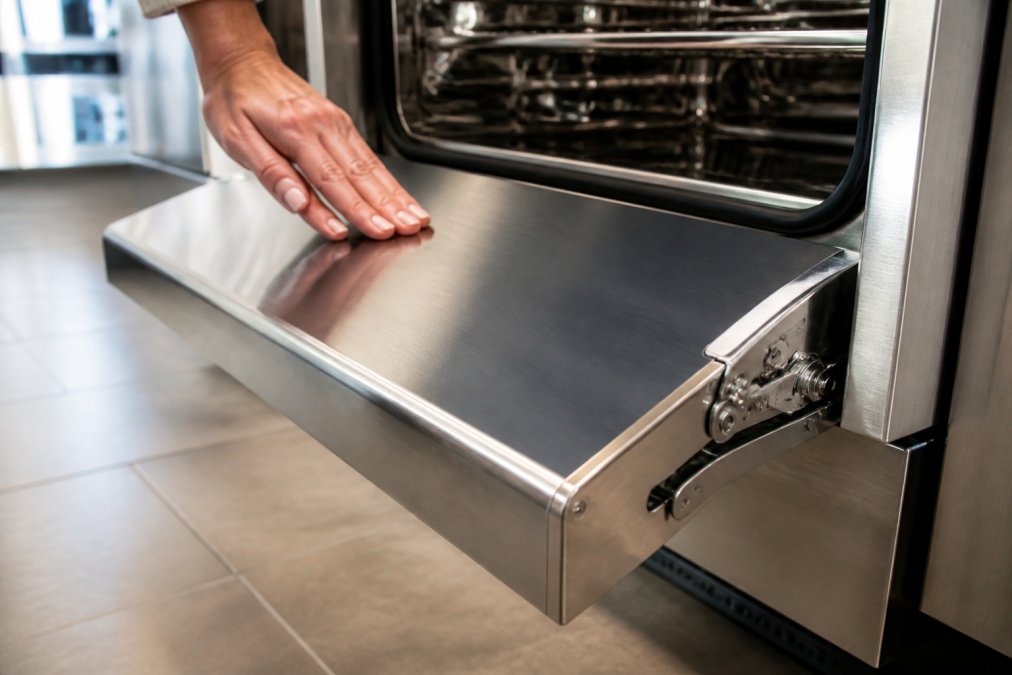
Build quality shows up in specific places. Check the door hinge weight, the thickness of stainless steel on the interior, and whether the manufacturer publishes a maintenance schedule at all. Stainless steel interior surfaces resist staining and hold up to repeated cleaning better than coated alternatives. High-end construction also means fewer plastic load-bearing parts in door mechanisms and drawer slides.
The Appliance Lifespan Guide: How Long Each Category Lasts
An appliance lifespan guide is only useful if it separates categories, because a refrigerator and a dishwasher age at completely different rates. Most major household appliances fall into recognizable replacement cycles, and knowing them helps you budget rather than react.
Average Lifespan by Appliance Type
| Appliance | Typical Lifespan | Primary Failure Mode |
|---|---|---|
| Refrigerator | 12-18 years | Compressor, door seals |
| Range or oven | 13-17 years | Ignition, control board |
| Dishwasher | 9-12 years | Pump, door gasket |
| Built-in microwave | 8-10 years | Magnetron |
| Range hood | 12-15 years | Motor bearings |
These ranges assume normal household use and basic preventative care. Heavy daily cooking, hard water, and skipped maintenance all shorten them.
Predicted Reliability Ratings and Consumer Ratings
Predicted reliability ratings estimate how likely a model is to need a repair within its first few years, based on aggregated service data and owner surveys. Consumer ratings capture satisfaction but skew toward first-year impressions, which is why they reward features over component durability. Read both, then weight the reliability data more heavily for a long-term purchase.
Factors That Influence Appliance Longevity
Three forces shorten appliance life more than any manufacturing flaw: how the unit is used, how it is powered and vented, and how quickly individual components fail. Address those and you extend operational life without touching a tool.
Usage Habits and Their Impact on Performance
Usage habits quietly determine whether a unit reaches year fifteen or dies at year eight. Overloading a dishwasher forces the pump to work harder. Slamming a refrigerator door fatigues the hinge and seal. Running a self-clean cycle repeatedly stresses control boards and heating elements. None of these are dramatic, and all of them compound.
Component Durability and Mechanical Failure
Mechanical failure usually starts with one inexpensive part. A worn door gasket makes a compressor run longer, which accelerates wear on the most expensive component in the appliance. Replacing a gasket early is the cheapest repair you will ever make. This is why component durability matters more than any single specification on a spec sheet.
Best Practices for Appliance Care: Maintenance Schedules That Work
Best practices for appliance care come down to a short, repeatable routine rather than occasional deep cleaning. Owners who follow a simple schedule consistently get more years out of every unit than owners who clean thoroughly twice a year.
Preventative Care and Wear and Tear
- Vacuum refrigerator condenser coils every 6 months
- Wipe door gaskets monthly and check the seal with a dollar bill test
- Run a dishwasher cleaning cycle quarterly with a dedicated cleaner
- Inspect range hood filters monthly; degrease every 3 months
- Check water lines and connections annually for slow leaks
Preventative care is unglamorous and it works. Wear and tear is cumulative, not sudden, which means the small tasks are the ones that decide the outcome.
Repairability, Warranty Coverage, and Post-Warranty Costs
Repairability is the single most underrated factor in appliance ownership, and it is the one buyers investigate last. A unit that can be fixed cheaply with standard parts will outlast a more capable unit that requires proprietary components and a factory-authorized technician.
Proprietary Parts and Serviceability Challenges
Proprietary parts create serviceability challenges that only appear after the warranty ends. When a control board is unique to one model line, you pay whatever the manufacturer charges and you wait for their supply chain. Standardized parts, by contrast, are widely stocked and competitively priced. Before buying, ask one question: can a local technician service this, or does it require a factory call?
Smart Technology vs. Mechanical Longevity
Smart features and mechanical longevity pull in opposite directions more often than manufacturers admit. Connectivity, touchscreens, and app control add boards, sensors, and firmware dependencies that mechanical controls simply do not have. A dial does not need a software update.
Resale Value and Long-Term Investment
Resale value rewards durability more than any other appliance attribute, but the mechanism is more specific than most guides admit. Buyers and appraisers are not evaluating your appliances in isolation, they are estimating the probability of an immediate repair bill. A kitchen full of well-maintained, serviceable appliances reads as a maintained home.
What Actually Moves Resale Value
Three factors do most of the work:
- Service documentation. Receipts, filter change logs, and repair records signal that the previous owner treated the appliances as an asset rather than a consumable.
- Parts availability. A buyer's inspector will flag appliances from brands with discontinued parts lines or no local service network. That flag becomes a negotiation point.
- Age relative to expected lifespan. A ten-year-old refrigerator with a fifteen-year expected life is a different proposition than a ten-year-old dishwasher with a ten-year expected life.
Finish and brand recognition matter, but they matter less than a buyer's confidence that nothing major is about to fail.
The Post-Warranty Cost Curve
The financial case for durability lives almost entirely after the manufacturer warranty expires. During the warranty period, most repairs are covered and the cost difference between a durable and a marginal appliance is small. After the warranty ends, the gap widens fast.
A common pattern in premium appliance ownership:
- Years 1-3: Warranty covers defects. Out-of-pocket cost is near zero for covered components.
- Years 4-7: Wear items fail, door gaskets, water filters, drain pumps, igniters. These are inexpensive if parts are standardized and available.
- Years 8-12: Major components enter their failure window, compressors, control boards, motors. Cost depends almost entirely on whether the part is proprietary.
- Years 12+: Repair-versus-replace decisions begin. A unit with cheap, available parts stays worth repairing. A unit with a sealed control assembly may be functionally totaled by a single failure.
Why Repairability Is the Real Investment Metric
Treat the purchase as a long-term investment with a defined replacement cycle, and evaluate it the way you would evaluate any asset that requires maintenance. The relevant question is not "how long will this last" but "how much will it cost me per year of service, including repairs."
The Environmental Case for Durability
There is a second return on durability that does not show up in a resale appraisal. Major appliances are among the heaviest and most resource-intensive consumer goods in a home, and every premature replacement sends steel, copper, refrigerant, and electronic components into the waste stream. Extending an appliance's service life by even a few years through maintenance and repair reduces the lifetime environmental footprint of the kitchen more than almost any other single decision a homeowner can make.
Frequently Asked Questions
Do expensive kitchen appliances actually last longer?
Not automatically. Price alone doesn't guarantee durability, but premium kitchen appliances typically use heavier gauge stainless steel, sealed components, and better motor assemblies that resist wear. The real advantage shows up when maintenance is consistent. A well-maintained mid-range refrigerator can outlast a neglected luxury model. Look for build quality indicators like solid door hinges, stainless steel interiors, and accessible service panels rather than assuming a higher price tag means longer life.
What factors contribute most to the durability of high-end appliances?
Component durability, usage habits, and maintenance frequency matter most. Heavy-duty compressors, commercial-grade burners, and sealed control boards resist performance degradation better than standard parts. How you use the appliance matters too: overloading a refrigerator or running a range at maximum heat daily accelerates wear and tear. Following a maintenance schedule that includes coil cleaning, gasket checks, and filter replacements extends operational life significantly.
What is the average lifespan of a premium refrigerator or range?
Premium refrigerators generally last 12 to 15 years, while high-end ranges average 15 to 20 years with proper care. These figures assume regular maintenance and moderate use. Luxury tier appliances with stainless steel interiors and fewer electronic components often reach the upper end of those ranges. Replacement cycle timing depends on repair costs relative to a new unit, not just age alone.
Is it better to repair or replace a premium kitchen appliance?
Repair makes sense when the appliance is under 10 years old, the fix costs less than half a replacement, and parts are readily available. Replace when the compressor fails on an older refrigerator, when proprietary parts are discontinued, or when repair costs approach 50 percent of a new unit. Factor in energy efficiency gains from newer models, which can offset part of the replacement cost over time.
Durability is a decision you make before the delivery truck arrives. At Crestpoint Home, we help homeowners choose high-performance, reliable products backed by detailed specifications, a responsive support team, and a secure checkout, so every selection is a confident investment. Browse the collection and build a kitchen that holds up for the long term.

