


Best Energy Efficient Appliances for Modern Kitchens
Table of Contents
- How to Choose Energy Efficient Appliances for a Modern Kitchen
- Quick Comparison: Top Energy Efficient Picks
- Federal Tax Credits for Energy Efficient Appliances
- Benefits of Induction Cooktops for Energy Savings
- How to Reduce Kitchen Energy Consumption
- Smart Home Integration and Appliance Efficiency
- Retrofitting vs. Replacing Old Appliances
- Frequently Asked Questions
Last Updated: September 18, 2026
How to Choose Energy Efficient Appliances for a Modern Kitchen
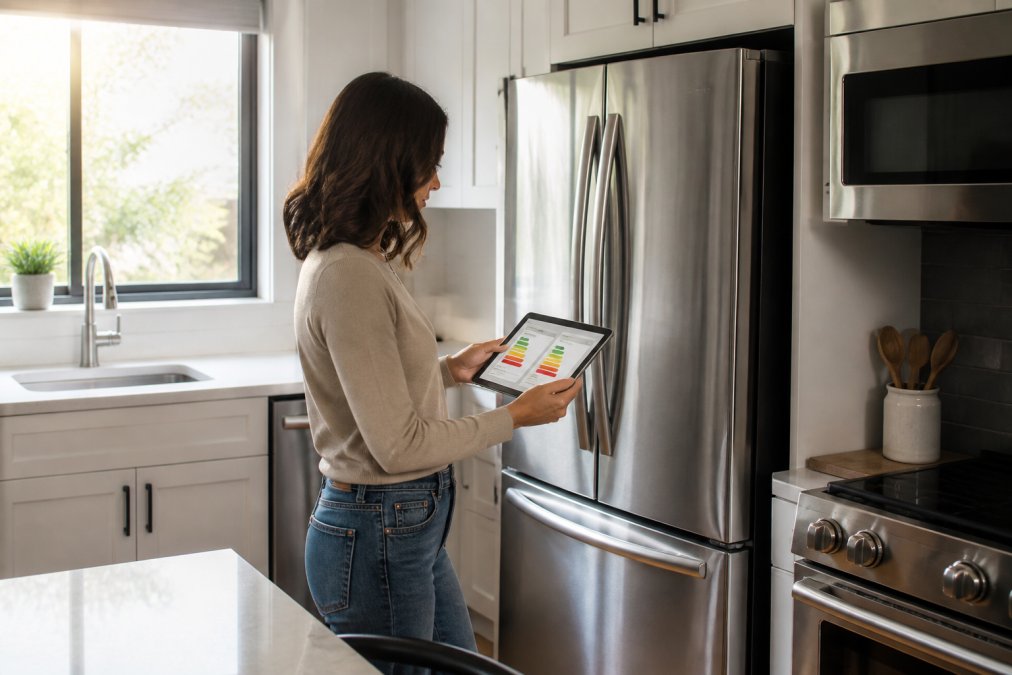
Choosing energy efficient appliances for a modern kitchen starts with the yellow EnergyGuide label and the blue Energy Star mark, then narrows to the models that fit your cooking habits. At Crestpoint Home, we understand that choosing the right appliance involves considering how you'll use it most often, as the appliance that saves the most is the one you run most often.
The first step is understanding what you actually pay for. Every appliance draws power measured in watts, and your utility bills you by the kilowatt-hour, which is 1,000 watts running for one hour. A 1,500-watt oven used for one hour consumes roughly 1.5 kilowatt-hours. Multiply that by your local rate and you have your real annual operating cost.
Three numbers decide most purchases:
- Wattage and run time, which set your energy consumption per use
- Energy Star rating, which confirms the model beat federal efficiency standards
- Capacity versus household size, because an oversized appliance wastes power on partial loads
Energy Star Certification Explained
Energy Star is a federal labeling program run by the U.S. Environmental Protection Agency that identifies products meeting efficiency standards set above the minimum required by law. For appliances, the Energy Star program overview publishes the current criteria by category, and those criteria change as technology improves.

The label matters because it is third-party verified, not a manufacturer claim. A refrigerator, dishwasher, or washer carrying the mark has been tested against a defined energy performance threshold. The Federal Trade Commission's guidance on the EnergyGuide label explains the yellow tag you see on showroom floors, which estimates annual operating cost based on average use.
Two caveats worth knowing. First, Energy Star covers categories, not every model in a category, so two similar ovens can differ. Second, the rating reflects typical use, and heavy users see savings scale up while light users see less.
Quick Comparison: Top Energy Efficient Picks
The table below maps countertop appliances to the job they do best, so you can match a model to how your kitchen actually runs.
| Appliance | Power Draw | Best For | Price |
|---|---|---|---|
| Cuisinart Air Fryer Toaster Oven 7-In-1 | 1800W | Replacing a full-size oven for small meals | $161.12 |
| Breville Joule Oven Air Fryer Pro | Smart, app-connected | Guided recipes and precise multi-stage cooking | $680.66 |
| Kenmore 8 Qt Air Fryer Aerogrill | 1700W | Family-sized batches with little to no oil | $210.61 |
| Ninja Foodi Smart XL Grill & Air Fryer | 500°F cyclonic air | Indoor grilling without an outdoor grill | $272.46 |
| Vitamix Ascent X2 SmartPrep System | 2.2 HP | Blending plus food processing in one base | $866.23 |
| Vitamix Explorian E310 | 2 HP | Entry-level professional blending | $408.54 |
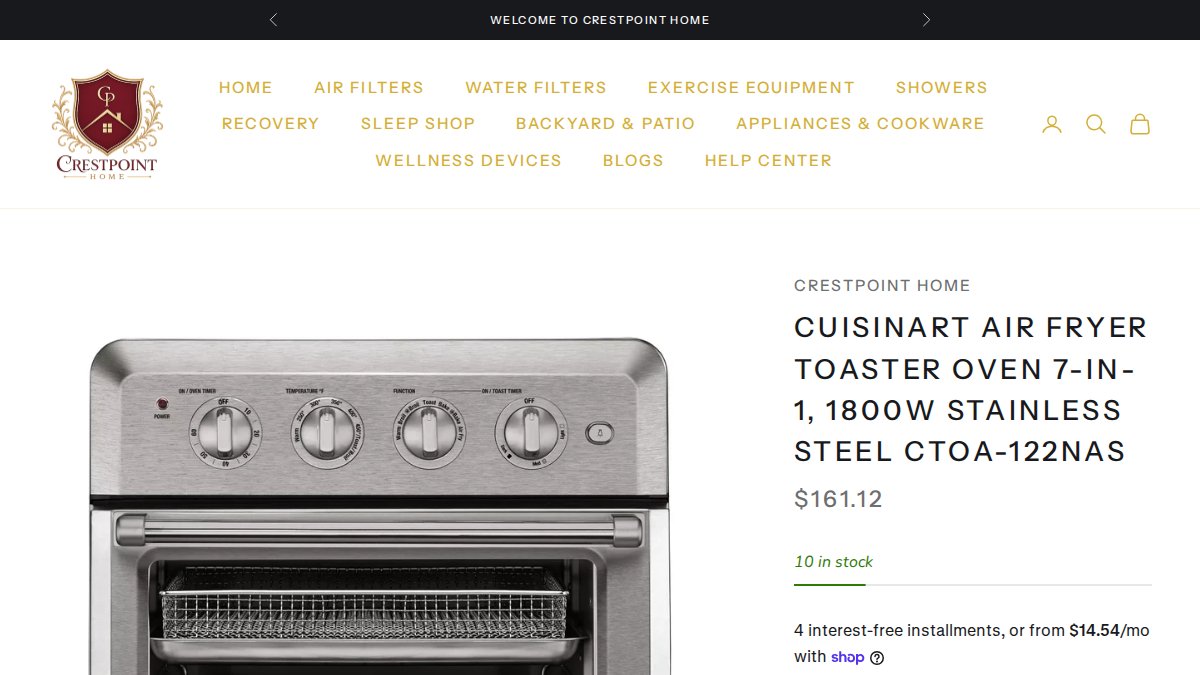
The Cuisinart Air Fryer Toaster Oven is our top pick for most kitchens because it replaces both a toaster and a full-size oven for everyday meals. It runs seven functions including air fry, convection bake, and convection broil, with a 0.6 cubic foot interior that fits a 4-pound chicken or a 12-inch pizza. The non-stick interior is PFAS-free, and the 60-minute timer with auto shutoff prevents the classic "left it running" waste. Where it falls short: it is not a substitute for a full-size oven at holiday scale.

The Breville Joule Oven Air Fryer Pro is the pick for cooks who want precision. Its Element IQ system uses five independent quartz elements and digital PID temperature control to steer power where it is needed, which reduces the cold spots that force longer cook times. App-based progress monitoring makes it a connected option here. The trade-off is price and a learning curve.
For families, the Kenmore 8 Qt Air Fryer handles volume with a 1700W system and 12 presets across a 90-400°F range. The Ninja Foodi Smart XL Grill adds indoor grilling at 500°F with a smart thermometer covering four protein presets and nine doneness levels, so you stop opening the door to check.
Federal Tax Credits for Energy Efficient Appliances
Federal tax credits for energy efficient appliances are governed by U.S. tax code and change with each legislative cycle, so the amount you can claim depends on the year and the specific product category. The IRS guidance on energy-efficient home improvement credits and the Department of Energy's consumer tax credit resources are the two sources to check before you buy, since they list which categories qualify and what documentation you need.
The credit mechanism itself is straightforward once you know where to look.
Three steps to avoid leaving money on the table:
- Confirm the category qualifies for the current tax year. The qualifying list is updated periodically, and a model that qualified last year may not qualify this year.
- Save the manufacturer's certification statement. This is a separate document from your receipt and is the proof the IRS expects.
- Check for stacked incentives. Many utilities and state programs offer rebates on top of the federal credit, and some retailers apply them at checkout. The Database of State Incentives for Renewables & Efficiency tracks programs by ZIP code.
One more caveat: credits are non-refundable, meaning they reduce what you owe but do not generate a refund beyond your liability. If your tax liability is low, a rebate may be worth more to you than a credit. Run both numbers before you decide which upgrade to prioritize.
Benefits of Induction Cooktops for Energy Savings
The core benefit of induction cooking is that the pan itself becomes the heat source. A magnetic field induces current in the cookware base, so almost all the energy goes into the pan rather than the surrounding air. Gas and standard electric elements lose a meaningful share of their heat to the room, which is why induction heats faster and runs cooler.
How to Reduce Kitchen Energy Consumption
Reducing kitchen energy consumption comes down to changing how you operate what you already own. Most households can cut waste without buying anything new.
- Match the appliance to the task. A toaster oven or air fryer preheats faster and draws less than a full-size oven for small portions.
- Batch your cooking. Running one oven cycle for several dishes beats three separate cycles.
- Skip the preheat when it is not needed. Many recipes do not require a fully preheated cavity.
- Keep refrigerator coils clean. Dusty coils make the compressor work harder, raising energy consumption.
- Run full dishwasher loads. A full load uses roughly the same water and power as a partial one.
- Use lids and match pan size to burner. Trapped heat cooks faster.
- Unplug standby loads. Small appliances with clocks and displays draw power around the clock.
Smart Home Integration and Appliance Efficiency
Smart appliance integration improves efficiency by removing the guesswork that causes overcooking and repeat cycles. A connected oven that reports internal temperature lets you pull food at the right moment instead of opening the door three times, and every door opening dumps heat you paid for.

- Load shifting. A connected dishwasher or washer can be scheduled to run during off-peak hours, when utility rates are lower. Some utilities offer time-of-use rates that make this a direct bill reduction, not just a theoretical one.
- Demand response. Many utilities run demand-response programs that send a signal to enrolled smart appliances during grid stress events, briefly pausing or delaying a cycle in exchange for a bill credit. Enrollment is usually free and handled through the utility's app or your thermostat platform.
- Cross-device coordination. A smart thermostat can talk to a smart oven: when the oven signals it is preheating, the thermostat can pre-cool the kitchen zone before the heat load hits, reducing the cooling penalty of cooking in summer.
- Usage dashboards. Connected appliances report run time and cycle counts, which turns vague advice like "run full loads" into a measurable target. If your dishwasher averages four half-loads a week, the dashboard shows it.
Retrofitting vs. Replacing Old Appliances
Retrofitting usually wins on cost and waste, while replacing wins on efficiency and features. The right call depends on the age and condition of what you have, not on a blanket rule.
Frequently Asked Questions
What appliances use the most electricity in the kitchen?
Refrigerators run 24/7 and typically consume the most kilowatt-hours annually, followed by ovens and dishwashers. An energy-efficient refrigerator can cut power consumption by 15-20% compared to older models. Air fryers and toaster ovens use less energy than full-size ovens for small meals, making them smart additions to a modern kitchen.
Do energy-efficient appliances actually save money on utility bills?
Yes. Energy Star certified appliances use 10-50% less energy than standard models depending on the category. Over an appliance's lifecycle, those savings add up to hundreds of dollars in utility bill reduction. Combining efficient appliances with smart sensors and proper maintenance maximizes your annual operating cost savings.
What federal tax credits are available for energy-efficient appliances in 2026?
The Inflation Reduction Act offers tax credits for qualifying energy-efficient appliances, including certain refrigerators and dishwashers. Credits vary by appliance type and efficiency rating. Check the Energy Star website for current qualifying models and consult a tax professional to confirm your eligibility before filing.
How do I identify Energy Star certified appliances?
Look for the blue Energy Star label on the appliance or its energy label. This certification means the product meets strict energy efficiency ratings set by the EPA. You can also search the Energy Star database online by model number to verify certification before purchasing.


