
Best Kitchen Appliance Brands for Longevity
Table of Contents
- What Makes a Kitchen Appliance Brand Last
- Average Lifespan of Kitchen Appliances by Type
- Top Kitchen Appliance Brands That Deliver Longevity
- How to Maintain Kitchen Appliances for Longevity
- Repair Frequency and Parts Availability
- Best Kitchen Appliance Brands for Resale Value
- Signs It's Time to Replace Your Appliances
- Conclusion
Last Updated: August 30, 2026
What Makes a Kitchen Appliance Brand Last
Build quality separates appliance brands that last decades from those that fail within five years. The best kitchen appliance brands for longevity prioritize durable materials, proven component design, and accessible repair infrastructure. At Crestpoint Home, we've analyzed what distinguishes truly long-lasting appliances from marketing claims, and the answer lies in engineering fundamentals rather than brand prestige alone.
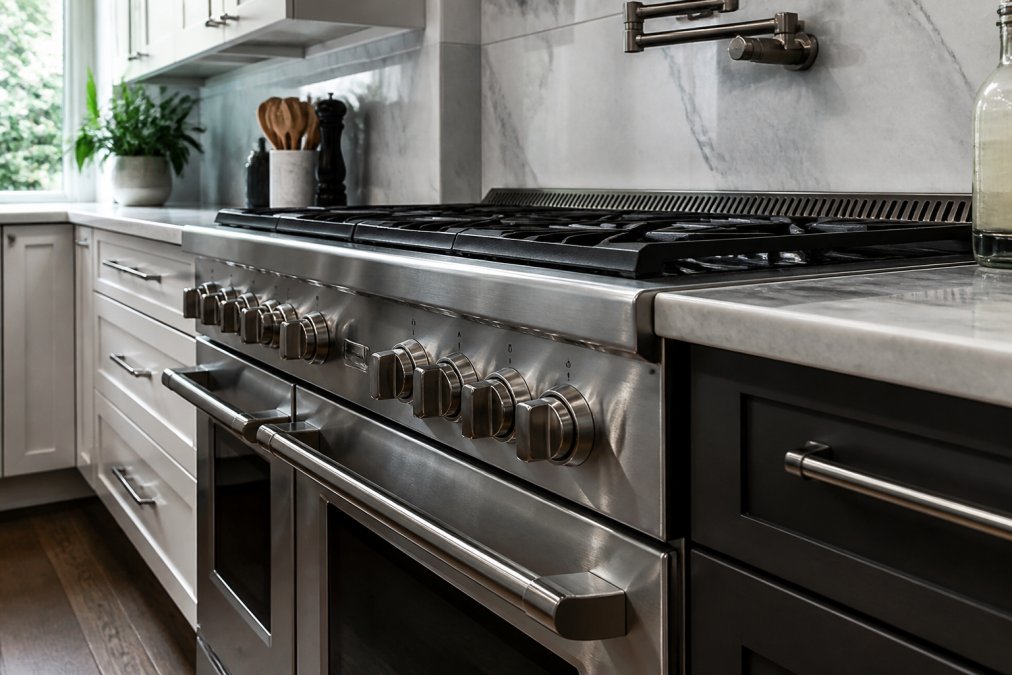
The boiler material, control board design, and heating element construction directly impact service life. Brands that use brass or copper boilers instead of plastic components demonstrate commitment to durability. Rotary pumps outlast vibratory pumps in espresso machines. Heat exchanger systems prove more reliable than single-boiler designs under heavy use.
The best kitchen appliance brands for longevity also maintain strong spare parts availability. When your refrigerator's compressor fails at year eight, a brand that still stocks replacement components at reasonable cost means you repair rather than replace. Brands that discontinue parts support force owners into premature disposal. Smaller, specialized manufacturers often outperform mass-market brands by maintaining backward compatibility and parts inventory for models released a decade ago.
Warranty coverage signals manufacturer confidence. Brands offering five-year warranties on major components believe their products will survive that timeframe. One-year warranties suggest planned obsolescence.
Average Lifespan of Kitchen Appliances by Type
Appliance longevity varies dramatically by category. Refrigerators typically last 12-17 years with proper maintenance, while dishwashers average 9-12 years (the CDC). Ranges and ovens often exceed 15 years, particularly gas models with simpler mechanical designs. Espresso machines built with heat exchanger technology routinely reach 20+ years of reliable service when maintained properly.
Premium espresso machines from Italian manufacturers like Rocket Espresso and Faema represent the durability extreme. The Rocket Appartamento, featuring heated E61 groupheads, rotary pumps, and PID controllers, is engineered for multi-decade operation. The Lelit Elizabeth's dual boiler design with PID temperature control supports 15+ years of daily home use.

Specialty appliances like grinders show different patterns. The MAHLKÖNIG E80S GbW, with its real-time grind-by-weight technology and innovative disc distance detection, handles high-volume grinding without mechanical failure, extending service life well beyond budget alternatives.
Common failure points differ by appliance type. Control boards fail more frequently in newer smart appliances than mechanical switches in older models. Compressors in refrigerators become the critical component determining replacement timing. Heating elements in dishwashers and ranges represent another predictable failure point.
Top Kitchen Appliance Brands That Deliver Longevity
Premium European Brands
European manufacturers dominate the longevity category because they emphasize engineering depth over cost reduction. Italian espresso machine makers like Rocket Espresso, Faema, and La Spaziale build machines that survive decades of use.
The Rocket Appartamento TCA ($2,300) advances the iconic Appartamento with temperature control features while maintaining the hand-built construction and heat exchanger system that made the original a 20-year machine. The boiler capacity of 1.8 liters, wider drip tray, and tank reservoir sensor reflect decades of user feedback. Rocket's commitment to pre-infusion capability and solenoid valves ensures consistent extraction quality across thousands of shots.
Faema machines represent another tier of European durability. The Faemina White ($5,100) combines minimal design with advanced technologies including double boiler, water softening filter, and autosteam wand, all designed for multi-decade operation. The machine's 100% Italian manufacture and high-quality steel and aluminum construction signal commitment to longevity.
The Nuova Simonelli Appia Life Volumetric ($5,395) builds on proven reliability with high productivity design. Its volumetric dosing system allows consistent programming throughout the day, reducing barista-induced wear on components.
La Spaziale's Dream Espresso Machine ($2,985) offers touchscreen controls with manual and volumetric options, built-in shot timer, and programmable profiles. The dual boiler design with PID-controlled group temperature and rotary pump construction ensures this machine handles daily use without mechanical failure.
Reliable Mid-Range Manufacturers
The Lelit Elizabeth ($1,799.95) demonstrates that mid-range pricing doesn't require compromising on service life. Its dual boiler design with fast heat-up times, digital PID, pre-infusion capability, and built-in shot timer reflects engineering principles found in machines costing twice as much. The 58mm brass brew group, illuminated pressure gauge, and 2.5-liter BPA-free water reservoir show attention to longevity details. The vibratory pump, expansion valve accessibility, and ability to shut off the steam boiler independently all reflect designs that prioritize repairability and long-term reliability.
Specialty Appliance Leaders
Specialty manufacturers like Mahlkönig focus entirely on single-category excellence, which drives longevity. The MAHLKÖNIG E80S GbW ($4,195) combines record grinding speed with grind-by-weight technology and disc distance detection. The 80mm burr size, 845-watt motor, and 1,700 rpm speed deliver consistent grind quality for thousands of shots without mechanical failure. NSF-8 and ETL sanitation listing indicate professional-grade durability standards.
These specialists maintain parts availability and support infrastructure because their entire business depends on category expertise.
How to Maintain Kitchen Appliances for Longevity
Preventative Maintenance Schedule
Preventative maintenance transforms appliance service life. A refrigerator that receives annual coil cleaning lasts 5+ years longer than one that doesn't (energy.gov). Espresso machines descaled monthly operate for decades; those descaled annually fail within 10 years.
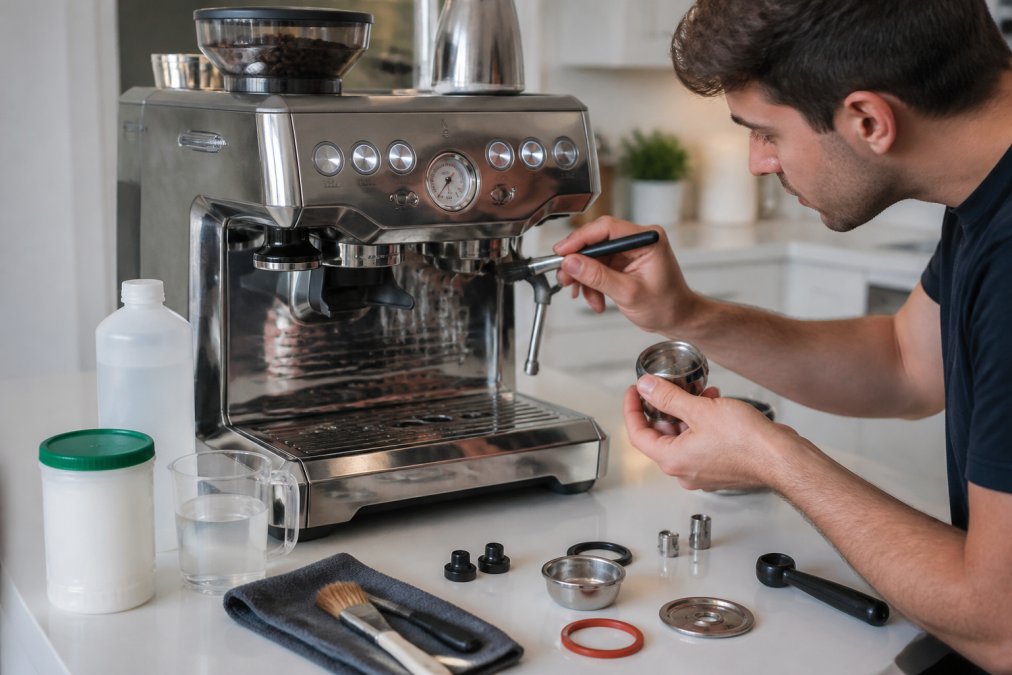
Create a maintenance calendar aligned to each appliance's operational cycle:
| Appliance | Monthly | Quarterly | Annually |
|---|---|---|---|
| Espresso Machine | Purge group heads, backflush | Deep clean shower screen | Descale boiler, replace gaskets |
| Refrigerator | Check seals | Clean condenser coils | Inspect compressor operation |
| Dishwasher | Clean filter, check spray arms | Run cleaning cycle | Inspect heating element |
| Range | Wipe stovetop | Clean burner components | Check ignition system |
Espresso machine maintenance directly extends service life. The Rocket Appartamento and Lelit Elizabeth both require monthly backflushing to clear coffee grounds from the solenoid valve. This 30-second procedure prevents pressure buildup that damages internal seals. Quarterly deep cleaning of the shower screen and group gasket replacement every 6-12 months maintains extraction quality and prevents mechanical failure.

Descaling addresses mineral buildup that clogs heating elements and boiler passages. Hard water areas require monthly descaling; soft water areas can extend to quarterly.
Common Issues and How to Avoid Them
Control board failure represents the most common premature failure in modern appliances. Water exposure, power surges, and thermal stress damage circuit boards. Protect appliances from direct water spray and use surge protectors for machines with electronic controls.
Compressor failure in refrigeration systems often results from inadequate ventilation. Appliances need air circulation around condenser coils. A refrigerator pushed against a wall fails 5 years earlier than one with 4 inches of clearance (energy.gov). This single maintenance factor extends refrigerator service life by 30%.
Heating element failure in dishwashers and ranges typically results from mineral scale. Hard water accelerates failure. Installing a water softener extends heating element life from 9-10 years to 12-15 years.
Seal degradation in espresso machines causes pressure loss and temperature instability. Rubber gaskets deteriorate from heat cycling. Replacing group gaskets every 12 months and solenoid valve seals every 18-24 months prevents pressure-related failures.
Water quality directly impacts service life across all appliances. Hard water minerals deposit inside boilers, heating elements, and pipes. Testing your water and adjusting treatment accordingly extends service life 20-30%. For espresso machines, many manufacturers recommend filtered water with specific mineral content. The Faemina includes an integrated water softening filter, addressing this longevity factor directly.
Repair Frequency and Parts Availability
The best kitchen appliance brands for longevity maintain parts availability decades after manufacturing. This separates brands committed to durability from those planning obsolescence.
European espresso machine manufacturers like Rocket, Faema, and Lelit maintain parts catalogs spanning 20+ years of production. You can order a replacement solenoid valve for a Rocket Appartamento manufactured in 2005. Mass-market brands often discontinue parts support after 7-10 years, forcing premature replacement.
Repair frequency correlates strongly with mean time between failures. Premium brands engineered for durability experience first major repairs at year 8-10 and then operate another 10 years with component replacement. Budget appliances fail at year 5-6 with no economic repair path.
Service technician availability matters equally. Brands with established networks of certified technicians reduce repair costs and turnaround time. Rocket and Faema machines can be serviced by qualified technicians nationwide; obscure brands may require factory service or mail-in repair.
Spare parts cost relative to appliance value determines repair economics. A $2,000 espresso machine with a $150 boiler replacement at year 12 gets repaired. A $400 machine with a $250 repair cost gets discarded. This is why premium brands' higher upfront cost translates to lower total cost of ownership.
Best Kitchen Appliance Brands for Resale Value
Appliances built for longevity maintain resale value because secondary buyers recognize quality. A five-year-old Rocket Appartamento sells for 60-70% of original price; a five-year-old budget espresso machine sells for 20-30%.
Premium European brands hold value because replacement parts are available and service life extends 15+ years. The Lelit Elizabeth maintains strong resale value because the dual boiler design, PID temperature control, and pre-infusion capability remain competitive features even in used equipment markets. Five-year-old models sell for $1,200-1,400, supporting the purchase decision for buyers planning 10+ year ownership.
Specialty appliances like the MAHLKÖNIG E80S GbW maintain value because commercial-grade burr sets and grind-by-weight technology don't become obsolete. Used grinders sell for 50-60% of retail price because the technology remains current.
Conversely, appliances with proprietary parts, discontinued software support, or rapidly evolving technology lose value quickly. Mechanical designs age more gracefully than digital ones.
Signs It's Time to Replace Your Appliances
Repair costs exceeding 50% of replacement value signal replacement timing. A $2,000 espresso machine needing a $1,000 compressor replacement at year 12 justifies continued operation. A $400 machine needing a $250 repair at year 5 suggests replacement.
Declining performance despite maintenance indicates component degradation beyond economic repair. An espresso machine producing inconsistent extraction despite fresh gaskets and descaling likely needs boiler replacement. A refrigerator struggling to maintain temperature after coil cleaning may have compressor failure.
Technological obsolescence differs from mechanical failure. A 15-year-old espresso machine with mechanical controls operates identically to new models. A 15-year-old smart refrigerator with discontinued app support becomes difficult to operate.
Parts availability determines practical service life. When manufacturers discontinue parts for a model, repair becomes impossible. This occurs 10-15 years after production for most brands, 20+ years for premium European manufacturers.
Safety concerns warrant immediate replacement. Electrical hazards, gas leaks, or structural failures create liability.
Choosing the best kitchen appliance brands for longevity requires understanding that durability comes from engineering fundamentals, material quality, proven component design, and parts availability, rather than brand prestige alone. European manufacturers like Rocket Espresso, Faema, and Lelit build machines surviving 15-20 years of operation. Mid-range alternatives like the Lelit Elizabeth deliver comparable longevity at lower cost. Specialty manufacturers like Mahlkönig maintain category expertise that drives durability.
At Crestpoint Home, we curate high-performance kitchen essentials built for lasting quality. Our selection includes precision espresso machines like the Rocket Appartamento and Lelit Elizabeth, both engineered for multi-decade operation. We prioritize brands that maintain parts availability, support repairability, and design for longevity rather than planned obsolescence. Our dedicated support team provides expert guidance on maintenance schedules and component selection, ensuring every appliance investment becomes a confident long-term asset. SHOP THE COLLECTION and transform your kitchen with appliances built to last.

Frequently Asked Questions
What is the most reliable brand for kitchen appliances?
Reliability depends on appliance type. Look for brands with strong warranty coverage (5+ years on major components), high consumer satisfaction ratings, and readily available service technicians in your area.
How do I determine the expected lifespan of a kitchen appliance?
Check the manufacturer's estimated service life, typically found in product documentation or warranty information. Refrigerators average 10-13 years, dishwashers 7-10 years, and ranges 13-15 years. However, actual lifespan depends heavily on maintenance frequency, water quality, usage intensity, and installation standards. Brands that publish mean time between failures (MTBF) data provide more realistic expectations than generic estimates.
Are luxury appliance brands actually more durable than mid-range options?
Not always. While premium brands often feature superior materials (stainless steel, brass components) and advanced control boards, durability also depends on component quality and serviceability. Some mid-range brands use the same compressors and heating elements as luxury lines but at lower cost. The real difference is build quality consistency, warranty length, and spare parts availability, factors that correlate more with price than guaranteed longevity.
What kitchen appliance brands should I stay away from?
Avoid brands with consistently poor repair frequency ratings, limited warranty coverage (under 1 year), or no local service network. Brands that discontinue models quickly often have scarce replacement parts. Research consumer complaint databases and check whether parts are still available for 5-year-old models. Brands with high control board failure rates or compressor issues relative to their market share should also be flagged.
How does installation impact appliance longevity?
Installation directly affects lifespan through proper ventilation, electrical grounding, water line pressure regulation, and leveling. Poor ventilation causes premature compressor failure in refrigerators; incorrect water pressure damages dishwasher inlet valves. Professional installation ensures appliances operate within manufacturer specifications, often required to validate warranty coverage.
This article was written using GrandRanker